

On a bitter winter afternoon in New York City, the Kennedy family emerged from behind a carefully guarded curtain of privacy to say goodbye to Tatiana Schlossberg. They walked into the Church of St. Ignatius Loyola on the Upper East Side with the kind of composure that looks effortless from the sidewalk and feels anything but inside.
The service was not announced ahead of time. There were no public invitations, no schedule, no running commentary. And yet the setting itself—Park Avenue, a prominent church, a neighborhood built for visibility—meant that the moment could never be fully hidden.
St. Ignatius Loyola carries its own history, and not only because of its location. Decades earlier, the same church held the memorial for Jacqueline Kennedy Onassis. For a family whose milestones have often unfolded in front of cameras, returning to that space was both personal and symbolic.
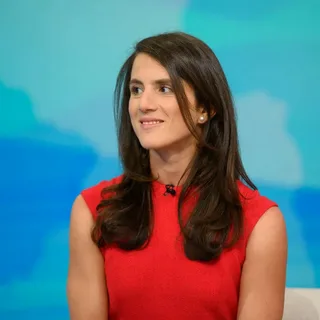
In the days before the funeral, details remained tightly held. That boundary was the point: the family could honor Tatiana without turning her last goodbye into public theater. Still, it was impossible to ignore what has always followed the Kennedys—the gentle hum of attention, curiosity, and expectation.
People came to pay respects, but the street also attracted onlookers who wanted a glimpse of a story they felt they already knew. For generations, Americans have watched the Kennedys through a split screen: part civic family, part cultural legend, part private household trying to live with an unusually public last name.
Tatiana Schlossberg was 35. In headlines, she was often introduced through her lineage—daughter of Caroline Kennedy, granddaughter of President John F. Kennedy, and part of a family that has shaped American public life for more than half a century. But in the lives of those who knew her, she was also a writer, a friend, a partner, and a mother.
She built her own career in journalism, focusing on the environment and the climate crisis. Her reporting and essays followed a quiet logic: pay attention to what is happening now, because the future is being decided in the present. She was respected for her seriousness and her ability to translate complex issues into human stakes.
Friends described her as bright, funny, and grounded. The versions of her that people saw at events—book talks, awards ceremonies, public panels—were often composed and thoughtful. The versions that her family knew at home were surely more ordinary and more intimate, the ones that do not fit into a caption.
Tatiana married George Moran, a physician. Together they built the kind of life that tends to feel both stable and busy: careers, young children, routines, plans. Their family included two small kids, Edwin and Josephine, still at ages where memory is more sensory than narrative.
Then a diagnosis arrived that tore through those plans. Tatiana later wrote that she learned she had acute myeloid leukemia after giving birth to her daughter in May 2024. What should have been a season of recovery and newborn sleeplessness became, instead, a crash course in hospitals, blood counts, and uncertainty.
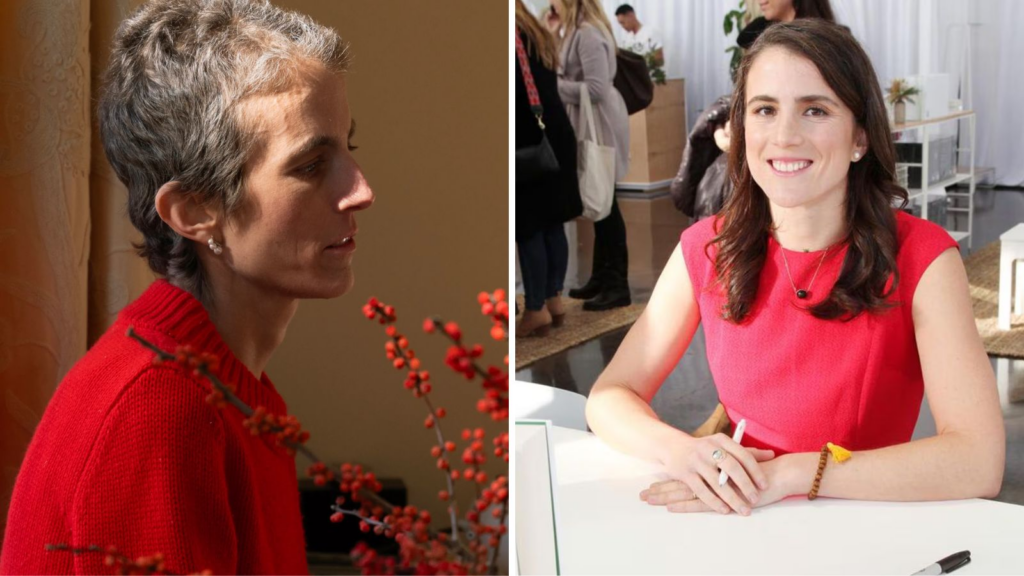
Treatment was grueling. She went through major interventions, including chemotherapy and transplants, and at times she entered clinical trials. In the space where new parents usually trade advice about diapers and naps, she was confronting infection risks, long hospital stays, and the emotional whiplash of hope followed by bad news.
In late 2025, she made a choice that changed how the public would know her. She wrote a deeply personal essay for The New Yorker, describing her illness with an honesty that was not curated for comfort. The piece did not read like a press release or a polished obituary-in-advance. It read like a person trying to hold onto life while time accelerated.
She wrote about memory arriving in flashes, about childhood scenes replaying with startling clarity, and about the strange way a terminal diagnosis can make the mind act like an archivist. She wrote about motherhood not as a sentimental symbol but as a daily ache—wanting to be present, fearing absence, counting the hours.
The essay also made room for anger. Tatiana criticized political decisions and public debates that, in her view, shaped the landscape for patients fighting disease. The criticism landed loudly because it came from someone who knew the health system from the inside, not as a slogan but as survival.
Readers responded because the essay did not ask for pity. It asked for recognition: that illness is both medical and moral, that people do not stop being themselves when they become patients, and that the end of life is not a tidy narrative with a single lesson.
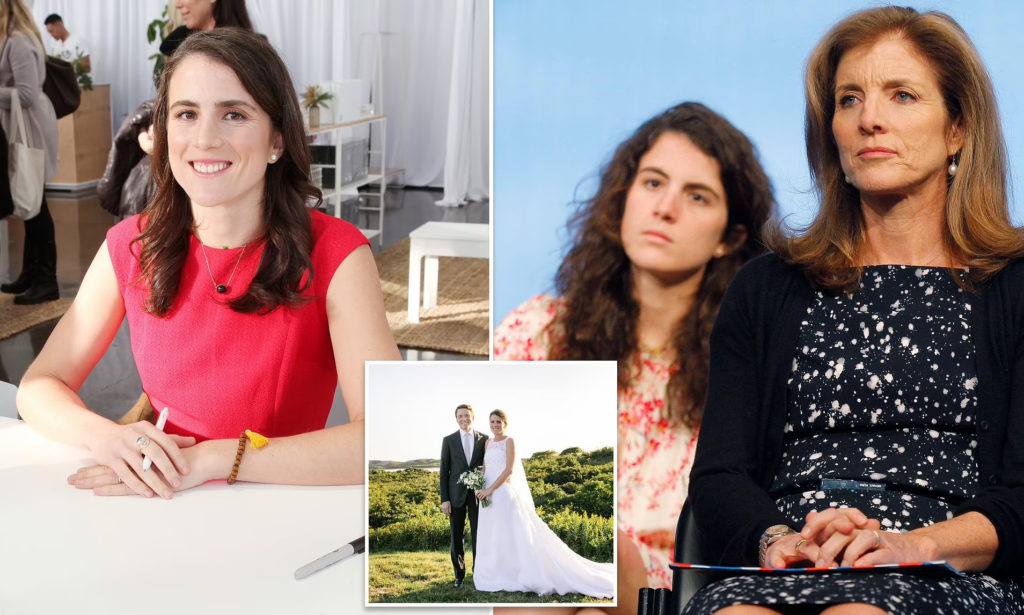
Tatiana died on December 30, 2025, less than six weeks after her essay was published. News of her death carried the blunt sadness that often follows stories of young parents: the sense that time was stolen, that a family’s future was rewritten without consent.
Her funeral was held on Monday, January 5, 2026. The timing felt close, as funerals often do, but in this case it underscored how quickly grief moved from private shock to public notice. Even when a family tries to keep the details quiet, a famous name can turn any gathering into a headline.
Caroline Kennedy arrived with her husband, Edwin Schlossberg, and with their surviving children, Rose and Jack. They entered the church not as symbols but as parents and siblings doing what families do when there are no good options left.
George Moran arrived with the couple’s children. The sight of a young widower carrying toddlers through a city winter is the kind of image that can short-circuit language. It brings people back to the basic fact that celebrity does not insulate anyone from loss.
Extended family members were present, including cousins who have also lived their lives in the public eye. The group included Maria Shriver and Kerry Kennedy, among others. Their attendance was both expected and quietly meaningful—family showing up, even when the family itself can be a complicated institution.
There were also prominent friends and public figures in attendance. Former President Joe Biden was seen leaving the service. Former Secretary of State John Kerry attended, as did television host David Letterman. Fashion designer Carolina Herrera, who designed Tatiana’s wedding dress, was there as well.
David Remnick, the editor of The New Yorker, attended too—an understated reminder that Tatiana’s public voice did not come only from her surname. It came from her writing, her editorial relationships, and her decision to speak directly to readers at the most difficult point of her life.
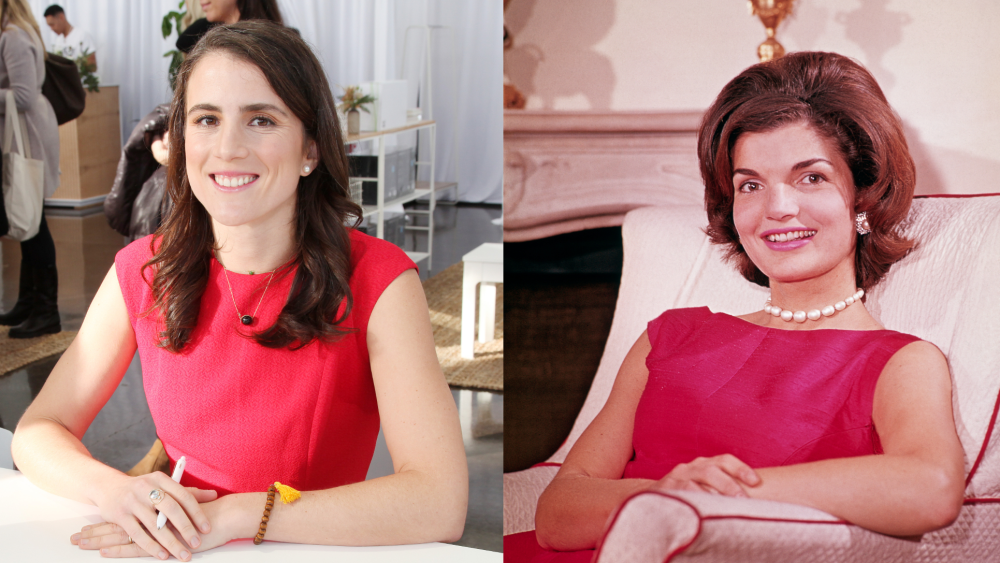
For many observers, the guest list invited interpretation. When public figures attend a funeral, people tend to read the seating chart like a statement. But in moments of grief, the simpler explanation is often the true one: people show up because they cared, because they were asked, or because they wanted to honor the dead.
Historian Steven M. Gillon has argued that the Kennedy family understands the role it plays in the national imagination. That doesn’t mean they enjoy scrutiny. It means they know that, for better or worse, Americans treat their family moments as part of a shared story.
Gillon has pointed to a pattern across generations: when tragedy strikes, the family often chooses ceremonies that are not completely hidden. There is a long tradition of public rites—services, memorials, processions—that allow the wider public to witness grief at a respectful distance.
Part of that tradition comes from the family’s place in politics. Another part comes from history itself: funerals have always been public markers, rituals that help communities acknowledge the end of a life. The Kennedys have had more such moments than most families could bear, and the country has watched many of them.
There is also the complicated question of privilege and responsibility. As the argument goes, the family has been given access, influence, and attention; in return, it has sometimes accepted the burdens that come with being a public symbol, including a public form of mourning.
None of that erases the private pain. Public visibility can make grief feel like performance, even when it is not. It can turn a walk from a car to a church door into a scene that is photographed, framed, and discussed by strangers.
Caroline Kennedy has lived with this tension since childhood. She was five years old when her father was assassinated, and her early life was shaped by a nation’s grief colliding with her own. She grew up learning that a last name can be both a shelter and a spotlight.
In the decades that followed, she experienced additional losses that would shake any person’s sense of safety. The deaths of close family members were not only personal tragedies but public events, producing ceremonies that the country treated as historical chapters.
That history has fed a narrative of “Kennedy resilience,” a phrase people often invoke as if endurance were inherited. But resilience is not an aesthetic. It is a set of skills learned under pressure: how to stand up when you want to collapse, how to show up when you would rather disappear.
Gillon describes Caroline as strong-willed, someone who has learned to meet public expectations without surrendering to them. The idea is not that she is unbreakable; it is that she keeps moving, because stopping would not protect her.
Losing a child, especially an adult child with young children of her own, is sometimes described as the unnatural order of grief. Parents expect to go first. When that order reverses, the language people reach for—“unimaginable,” “unspeakable”—is an admission that it cannot be made tidy.
In that sense, Tatiana’s death compounds the family’s long relationship with tragedy, but it is also its own separate wound. It is not a repetition of old headlines. It is a mother and father losing a daughter, a husband losing a wife, children losing the person who would have shaped their entire lives.
The choice of St. Ignatius Loyola can be read through that lens. It is a place of memory for the family and a place of ritual for the city. Holding the service there acknowledged a history that cannot be escaped while also offering a spiritual setting for a private goodbye.
Outside the church, the cold air and the tight sidewalks created a kind of unintended stage. New York does not pause for mourning, but it does notice it. Passersby slowed. Some people looked away out of respect. Others stared, unable to resist the magnet of a famous face in a vulnerable moment.
In a digital era, those glimpses become content. A photograph turns into a post, a post becomes a thread, and a thread becomes a story that travels farther than the truth can keep up with. Even when there are no dramatic revelations, people will invent meaning where there is only sorrow.
That is why the most important boundary may have been the one kept inside the church: what was said, what was prayed, what was shared among family and friends. The public could see who arrived and who left, but it could not own the service itself.
Tatiana’s life, as much as the headlines emphasized her illness, was not defined only by the end. She wrote about the environment because she believed the world was worth protecting. She wrote about climate not as an abstract debate but as a moral question about what we owe one another.
Earlier in her career, Tatiana also wrote about consumer habits and the hidden environmental costs embedded in everyday life. She had a knack for taking something familiar—a T-shirt, a phone upgrade, a trendy “green” purchase—and asking what happened before it reached a store shelf. The question wasn’t meant to shame people. It was meant to widen the frame, so choices could be seen in their full context.
That approach—curious, evidence-driven, and quietly insistent—fit her public persona. She wasn’t trying to be loud. She was trying to be precise. In an era when climate conversations can swing between doom and denial, her writing aimed for a third lane: realism with agency, facts with a human pulse, urgency without theatrics.
Her final essay carried that same precision into a different subject. She described medical details without turning her life into a case study, and she admitted fear without making it the only emotion in the room. The result was intimate but not indulgent—a piece that trusted readers to handle complexity, including the parts that don’t resolve cleanly.
Acute myeloid leukemia is an aggressive cancer of the blood and bone marrow, and it can move quickly. For patients and families, the timeline often feels compressed: symptoms, diagnosis, treatment decisions, hospitalizations, complications, long waits for lab results, and then—sometimes—unexpected turns. Even when medicine offers options, it rarely offers certainty, which is its own kind of torment.
That medical uncertainty is one reason public narratives can go wrong. From the outside, people want a storyline: a heroic fight, a turning point, a miracle. Inside the experience, life is more granular—hours measured by fevers, counts, transfusions, scans, and the simple wish to hold your child without fear.
The funeral’s visibility raised another modern tension: the collision between respectful reporting and social-media voyeurism. Traditional outlets may describe the setting and the attendees, but platforms can strip away context and turn images into memes, commentary, or speculation. When grief becomes content, empathy is often the first casualty.
For New York, a large church service involving a prominent family is also a logistical event. Streets are busy, sidewalks narrow, and the city’s rhythm doesn’t slow down. The result is a strange overlap: a sacred ritual unfolding while taxis honk, buses roll by, and strangers hurry past, unaware or only half aware of what’s happening behind the doors.
Her final essay expanded that moral frame. It asked readers to consider the systems that support or fail patients, and it revealed the emotional cost of disease in a way that policy arguments rarely capture. She did not write as an outsider looking in; she wrote as someone living inside the timeline.
For young parents who read her words, the essay hit with particular force. It spoke to the fear that ordinary routines can be interrupted at any moment. It spoke to the desire to give your children memories you won’t be there to explain. It spoke to the tension between hope and realism, and the exhausting labor of staying present.
For people who have watched the Kennedy family from afar, her story also reframed the myth. It reminded the public that the family’s tragedies are not cinematic plot points. They are events that leave real people waking up in the middle of the night, searching for a way to continue.
If there is a lesson in the family’s decision to step out publicly, it may be less about strength and more about acceptance. Grief can’t always be managed on your own terms. Sometimes you mourn in the open, not because you want to, but because life in a public family rarely comes with a closed door.
At the same time, public attention does not have to be predatory. Curiosity can coexist with restraint. The difference is whether viewers treat a funeral as entertainment or as a reminder to soften, to be quiet, to let other people’s pain remain theirs.
The fascination with the Kennedys has always been partly about aspiration—youth, glamour, politics, a sense of destiny. But the fascination has also been fueled by loss, by the repeated collision between prominence and mortality. In that collision, the public sometimes mistakes proximity for entitlement.
A funeral is a corrective to that mistake. It is a moment when the narrative stops being about a family name and becomes about a person whose life ended. Tatiana was not a headline; she was a writer who described the fragile, strange beauty of being alive while knowing it might soon be over.
The people who filed into St. Ignatius Loyola carried different versions of her: the colleague who admired her work, the cousin who remembered childhood, the friend who laughed with her at dinner, the parent who saw her as a girl, the husband who knew her as home.
Those versions do not compete. They stack on top of one another until the absence feels impossibly large. That is what funerals acknowledge: that a person occupies many places at once, and when they are gone, all of those places feel empty.
For her children, the work of memory will be different. Their memories will be shaped by photographs, stories, voices of relatives, and the writing Tatiana left behind. In time, they may read her essay and feel the strange comfort of hearing their mother speak in her own words.
For Caroline and Edwin, the task is to hold grief without letting it destroy the lives still around them. For Rose and Jack, it is to grieve a sibling while also helping carry the family forward. For George Moran, it is to raise young children while carrying a loss that will not shrink with time.
The public cannot solve any of that. But the public can do one small thing: watch with humanity. If the Kennedys understand that people are curious, the rest of us can understand that curiosity does not require intrusion.
In the end, the story is not about a famous family stepping into the cold. It is about a woman who wrote with clarity in the face of death, and about the people who loved her walking into a church to honor her life.
The rest—who attended, what coat someone wore, which car pulled up when—will fade. What will remain is the reality that grief is universal, even when it belongs to a family the world thinks it knows.
And perhaps that is why the scene felt so powerful. It wasn’t spectacle. It was a reminder that public history is made of private hearts, and that behind every name in the news there are people learning, again and again, how to say goodbye.
In moments like this, dignified responses are silence and care.

