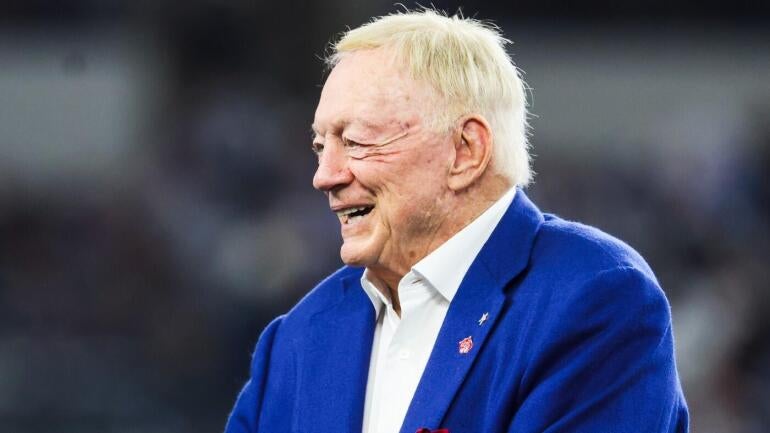
R1 After a crushing Week 16 elimination, Jerry Jones did something Cowboys fans have waited decades to hear — he publicly owned his role in Dallas’ now-30-year Super Bowl drought.

ARLINGTON, Texas — With the Philadelphia Eagles clinching the 2025 NFC East crown with a Saturday night win over the Washington Commanders, the Dallas Cowboys’ postseason chances officially went up in smoke, dropping to zero percent before kickoff of their Week 16 matchup against the Los Angeles Chargers.
That result means the Cowboys’ Super Bowl drought has officially reached 30 years, with Dallas’ last Vince Lombardi Trophy coming in the 1995 season — the bookend to the franchise’s 1990s dynasty that produced three championships in four seasons. Owner and general manager Jerry Jones has presided over both the glory years and the prolonged dry spell that followed.
Dallas is now the only NFC team that hasn’t reached a conference championship game in the past 30 years. Every other NFC franchise has appeared in a conference title game at least once since 2010. That’s why Jones took accountability following the Cowboys’ 34-17 loss to the now 11-4 Chargers on Sunday afternoon, which dropped Dallas to 6-8-1.
“I’ll admit that the Cowboys management has played a big role (in the 30-year Super Bowl drought),” Jones said postgame. “But seriously, I’m very disappointed that the way we’re structured, and my role, puts us here tonight. I’m tremendously disappointed.”
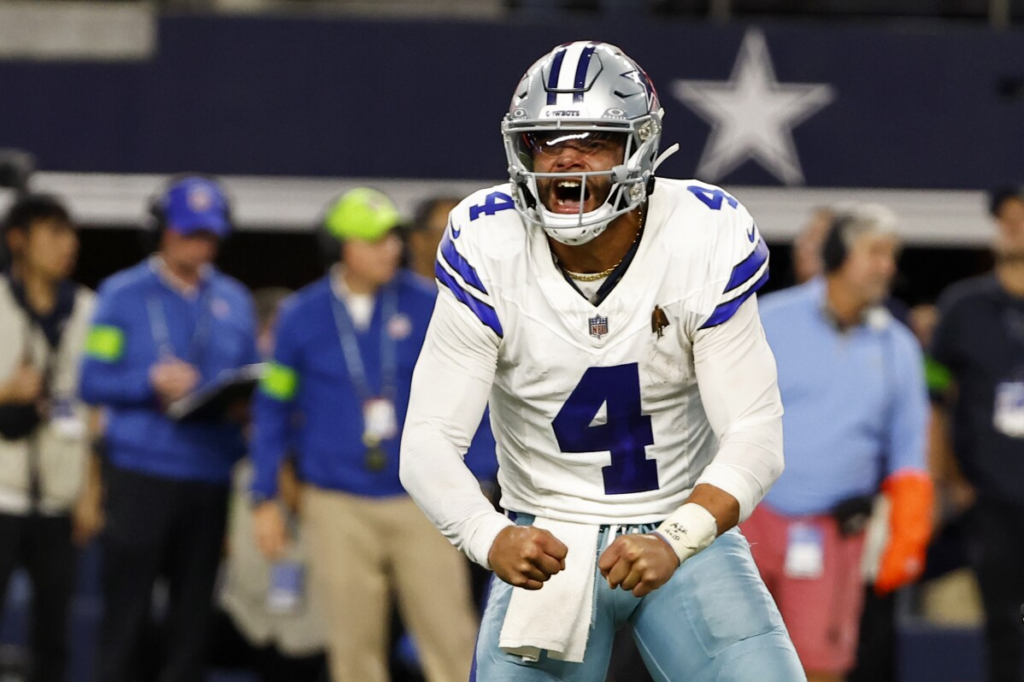
Despite that frustration, Jones said he remains confident he can reverse course at age 83, citing Dallas’ draft capital — including two first-round picks in 2026 — and an offense that has flourished in the first season under head coach Brian Schottenheimer, who also serves as the team’s primary offensive play caller.
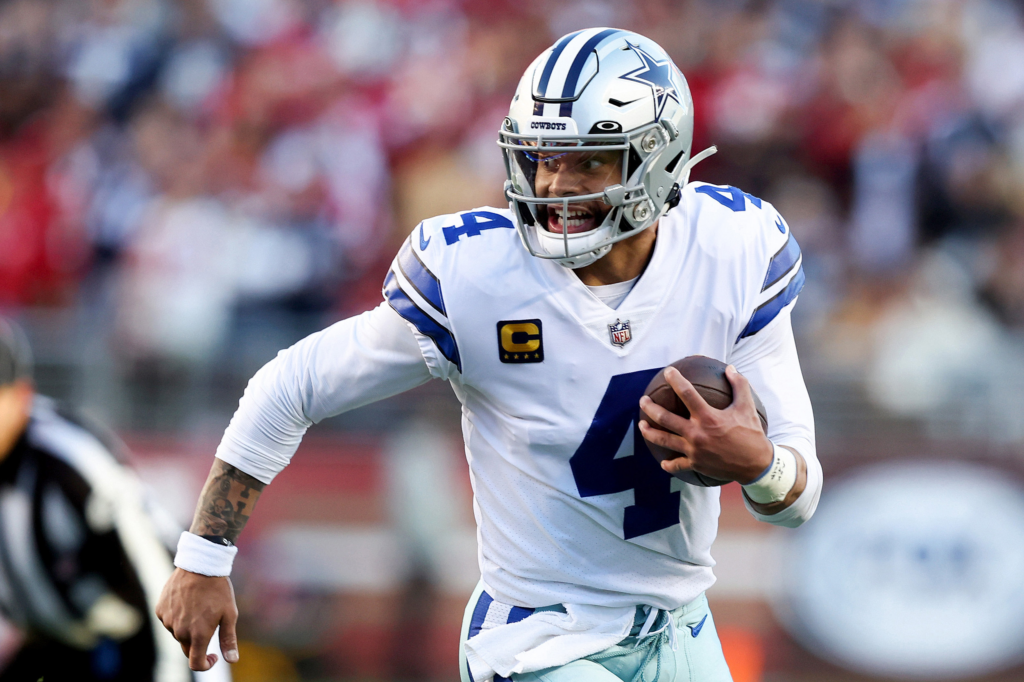
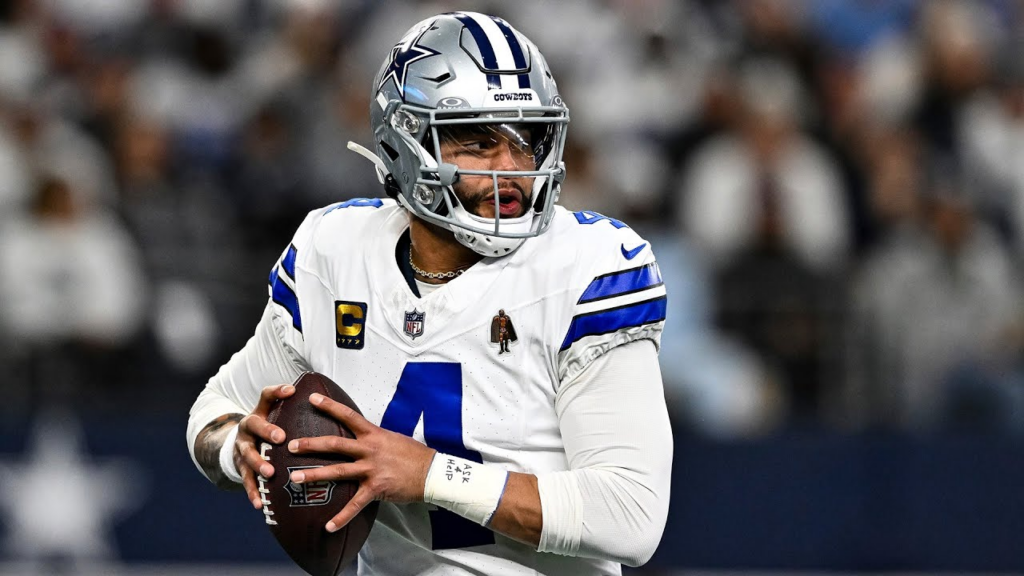
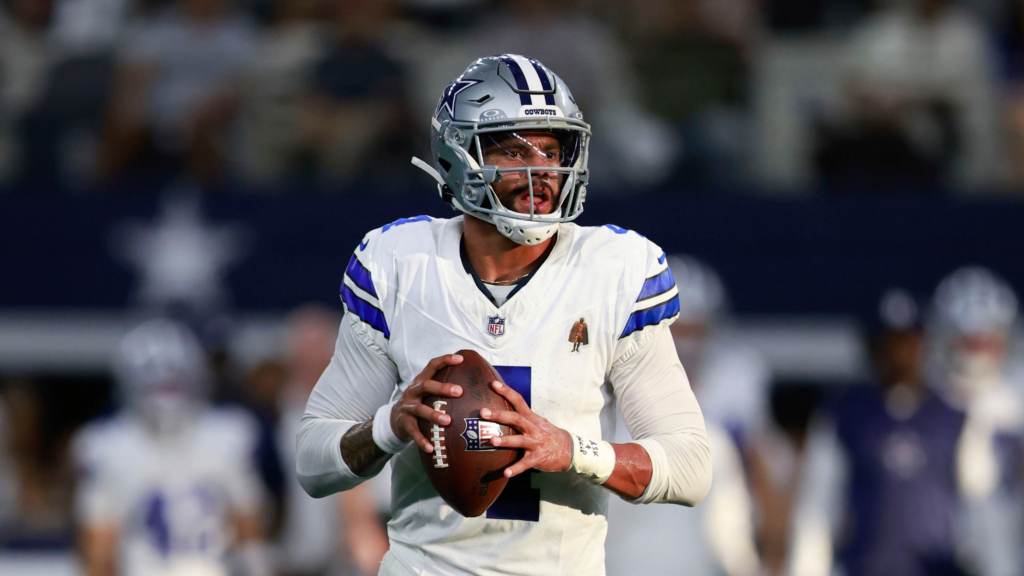
The Cowboys are averaging 28.3 points per game, with quarterback Dak Prescott throwing for 4,175 yards, running back Javonte Williams rushing for 1,147 yards and wide receivers George Pickens (1,342) and CeeDee Lamb (1,027) both eclipsing 1,000 receiving yards.
“Really, I don’t want to be trite, but the same way that I might have looked at the 30 years before I bought the Cowboys. That was then. This is now,” Jones said. “I’ve never looked at something because I haven’t done it in the past as something that’s not possible for us to do. We’re qualified, and we’ve got as good a place to be as you’d probably like to have with where we are with our draft picks.
“I like the job Schottenheimer’s done this year. I think he’s been outstanding. He’s a first-year coach, and he’s covered a lot of ground — not only his duties as head coach, but his duties on the offense and his duties over on the defense as well.”
So why should anyone believe Jones can change? He believes his willingness to alter his decision-making process is rooted in recognizing when past approaches haven’t worked. While Jones didn’t cite a specific example, one could point to the trade-deadline acquisition of Jets All-Pro defensive tackle Quinnen Williams as a shift toward a more aggressive approach.
That move, however, came too late to save the Cowboys’ season. Williams made his Dallas debut in Week 11, when the Cowboys were already 3-5-1.
“I can tell you right now one of the reasons I’ve enjoyed some of the things that worked for me is because I will change, and I do change,” Jones said. “I can make a decision … that is different from the ones I’ve been making. … I like what we’ve done with our cap. We’ll be able to spend money. We’ll be able to draft good, hopefully. … I really am better when I’m getting my ass kicked than I am when I’m having success, and I will eat the cheese.”
Jones also explained why he continues to operate as the Cowboys’ general manager — a role no other NFL owner occupies.
“When I got involved with the Cowboys, it was for an occupation. It was for a job, not as some type of investment,” Jones said. “There was nothing to invest in in the Cowboys. There was too much work and too many things you had to do. … Financially, there were a lot of challenges, but there’s a lot of challenges everywhere. … There are challenges today, and I welcome them. I’m proud I’m healthy enough and alert enough to address them.”
What to do with the defense?
One of Jones’ biggest challenges is fixing a defense that struggled mightily in its first season without All-Pro edge rusher Micah Parsons and under defensive coordinator Matt Eberflus. Dallas ranks second-worst in scoring defense (30.3 points allowed per game), third-worst in total defense (380.1 yards allowed per game) and eighth-worst in sack rate (5.5%).
Chargers quarterback Justin Herbert entered Week 16 having been sacked 49 times — tied for the most in the NFL — and hit 116 times, the most in the league. The Cowboys, however, failed to sack him on Sunday, recording just five quarterback hits. Williams did not play due to a neck injury and concussion.
“I was disappointed — very disappointed,” Jones said. “We came in really planning to get pressure and did not. It was obviously a disappointment not to have Quinnen out there, but we got some good play from 95 [Kenny Clark]. … That was a shortcoming of us today. We couldn’t get pressure.”
Jones said evaluating Eberflus is “not difficult” and confirmed all options will be considered. Dallas previously dismissed defensive coordinator Mike Nolan after one season in 2020.
“You can imagine the data, the analytics, the information that’s available today,” Jones said. “If I’m anything, I should have access to the greatest choices you could have regarding coaches. That doesn’t mean you can get them all, because they may be committed in other ways. But one of the great things about where we are and what we got is we can get good coaches.
“That’s not crossed my mind — the inability to effectively do something different if that’s what we decide. … We’ve got a team that has a top future as far as next year’s concerned, when you look at starting with the offense, starting with Dak [Prescott] as we stand here today. And I think we got the bones of a heck of a defense out there as well.”
As with the Cowboys’ 30-year Super Bowl drought, Jones was comfortable “facing the music,” answering questions for roughly 30 minutes following the team’s home finale. Whether that scrutiny leads to significant offseason changes remains to be seen.
“Ultimately, you point your finger right back at you on who fired Matt Eberflus,” Jones said. “It’s easy to say you could have done things differently, but that goes with the territory. Any time you make the ultimate decision, then you’ve got to look at that and weigh it.”