RM Elon Musk Supports Demis Hassabis in AI Debate with Yann LeCun Over ‘General Intelligence’


On Monday, Elon Musk, CEO of Tesla, entered a heated debate within the AI community, backing Demis Hassabis, CEO of Google DeepMind, in a public dispute with Meta Platforms’ (formerly Facebook) outgoing AI chief Yann LeCun. The disagreement centers on the concept of Artificial General Intelligence (AGI), with LeCun dismissing it as an illusion.
Musk voiced his support for Hassabis’ viewpoint, sharing a post on X (formerly Twitter) that simply read, “Demis is right,” amplifying the DeepMind CEO’s response to LeCun’s skepticism. This exchange highlights the growing divide among top AI researchers about the definition of intelligence and whether human intelligence can be truly considered “general.”
Hassabis strongly rebutted LeCun’s claim that “there is no such thing as general intelligence.” He argued that LeCun was conflating “general intelligence” with “universal intelligence.” In a detailed post, Hassabis elaborated that the human brain, one of the most complex systems known, is inherently a general learning machine. While acknowledging that no system is entirely general in practice, he stressed that, much like modern AI models, the human brain has the capacity to learn a wide range of tasks, given enough time, memory, and data.
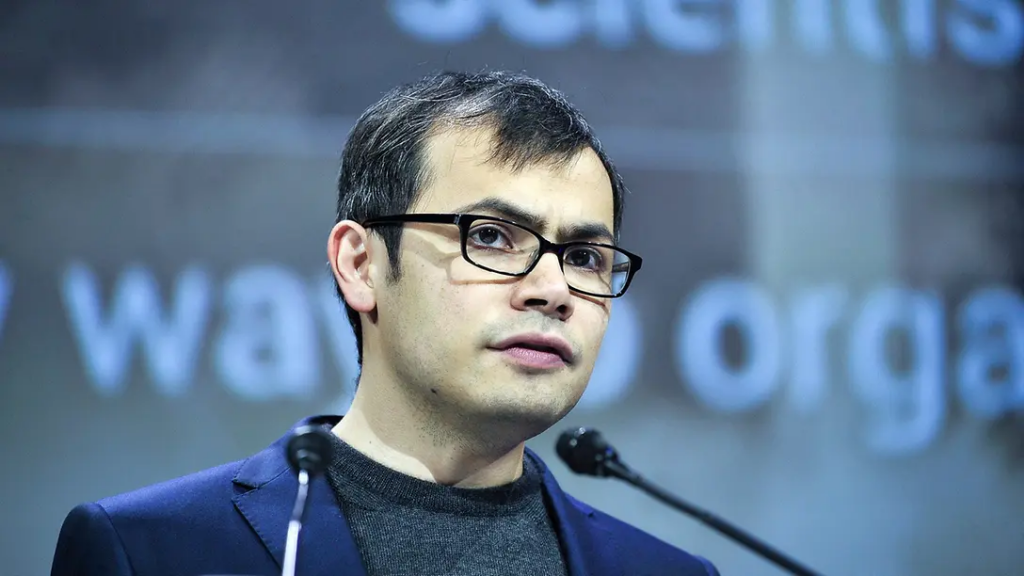
Hassabis further argued that humanity’s ability to invent complex concepts like chess, science, and engineering, despite evolving for survival tasks such as hunting, is evidence of the immense breadth of human intelligence. He concluded that LeCun’s assertion was simply incorrect.
“Yann is mistaken,” Hassabis wrote. “He’s confusing general intelligence with universal intelligence. Brains are exquisitely complex and indeed, highly general.”
In response, LeCun maintained that the dispute was primarily semantic. He did not back down from his stance, suggesting that the notion of AGI is exaggerated and largely a matter of how one defines intelligence.
LeCun’s New Venture and Shift from Meta
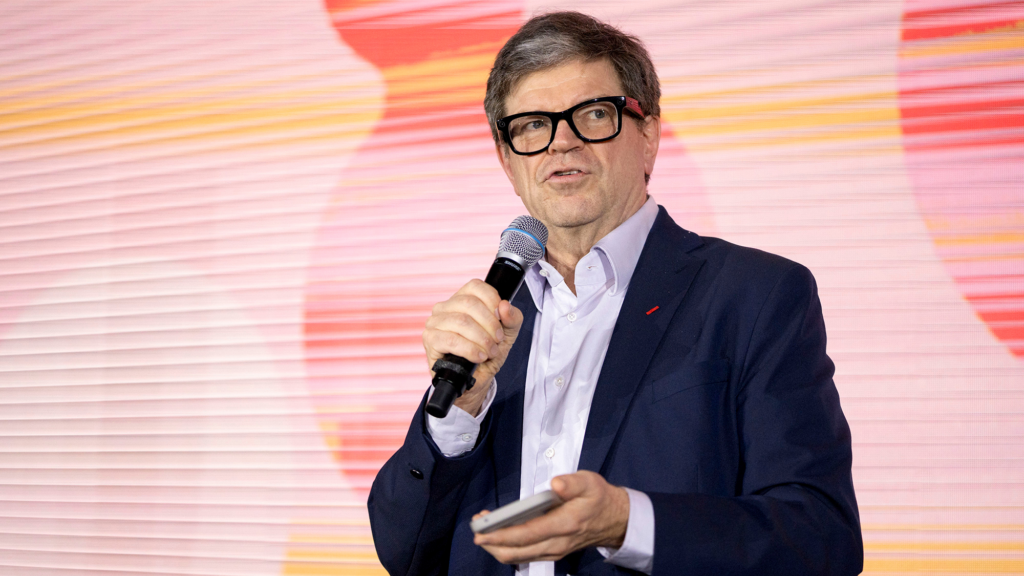
Yann LeCun, widely regarded as a key figure in AI development, is planning a major career shift. After years at Meta, where he helped shape the company’s AI strategy, LeCun will leave at the end of the year to pursue a new startup. This move comes as Meta itself pivots toward large language models (LLMs), which many believe have reached their commercial peak.
LeCun’s new company, focused on building AI systems based on “world models,” aims to revolutionize the understanding of the physical world. Unlike text-based AI, which is primarily designed to predict or generate text, world-model AI focuses on reasoning about movement, objects, and real-world interactions. This could lead to advancements in industries like robotics, autonomous vehicles, and physical AI systems.
LeCun expressed his belief that Silicon Valley’s obsession with generative AI (such as text generation) is limiting progress in AI research. He argued that breakthroughs in AI are more likely to happen outside of the Valley, with Paris emerging as a key hub for these developments. According to LeCun, current AI systems are impressive in areas like passing exams or writing software but still lag far behind in terms of physical reasoning, something that even a young child can do more effectively.
LeCun’s new venture aims to fill this gap by focusing on developing AI that can understand and interact with the physical world. He is seeking substantial funding for the project, which could push the boundaries of AI’s real-world applications.
LeCun’s Ambitious Startup Plans

In a major announcement, LeCun confirmed that his new company—Advanced Machine Intelligence (AMI) Labs—will be based in Paris, with a focus on creating next-generation superintelligent AI systems. The company plans to build AI using world models that can simulate physical environments, predict outcomes, and plan complex actions.
AMI Labs aims to raise €500 million (roughly $586 million) before launching, which would give the startup an estimated valuation of around €3 billion ($3.5 billion). This pre-launch valuation highlights the confidence investors have in LeCun’s vision, although concerns have been raised about an AI investment bubble, with some warning that enthusiasm for AI might be outpacing the actual business potential.
LeCun’s decision to move to Paris reflects his belief that the tech scene there, free from Silicon Valley’s entrenched models, offers a more fertile ground for innovation in AI. While Meta will not be investing in AMI Labs, the two companies are expected to continue collaborating in certain areas, signaling a continued relationship even as LeCun branches off to pursue his own vision.
The Future of AI: AGI vs. World Models
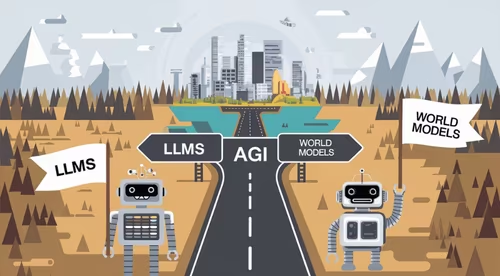
While LeCun’s departure from Meta has garnered attention, his focus is on shaping AI’s future beyond the current paradigm of generative models. By concentrating on AI systems that model the physical world, LeCun believes he can overcome the limitations of today’s language-based AI, which often produces inaccurate or fabricated results.
This shift in focus to world models is part of a broader trend among AI researchers, with other companies, including Google DeepMind and startups like Fei-Fei Li’s World Labs, also working on similar technology. World models offer a promising solution to the current limitations of LLMs, especially in terms of reliability and physical world reasoning.
The competition in this space is fierce, with other AI startups like Black Forest Labs and Quantexa, as well as deep-pocketed investors, closely watching LeCun’s next steps. The stakes are high as the AI industry continues to evolve rapidly, and LeCun’s new company could play a significant role in defining the next frontier of AI research.