On May 25, 2024, what should have been one of the happiest days in the life of George Moran became the beginning of a long goodbye. That morning, his wife, Tatiana Schlöberg, walked into the very hospital where George trained and worked to give birth to their second child. By nightfall, doctors would deliver a diagnosis that no amount of medical education could soften: terminal cancer.
Tatiana was diagnosed with acute myeloid leukemia caused by an exceptionally rare genetic mutation known as inversion 3. While AML itself is uncommon, this mutation places patients in a grim minority—resistant to standard treatment and effectively incurable with current medical science. In a single afternoon, George transformed from physician and new father into full-time caregiver, advocate, and witness to a disease he understood too well and yet could not defeat.
George Moran’s life had been shaped by discipline, purpose, and service long before tragedy struck. Raised in Greenwich, Connecticut, he grew up in a household that emphasized responsibility over prestige. His father, Garrett Moran, left a powerful career on Wall Street to lead Year Up, a nonprofit focused on economic opportunity for underserved young adults. His mother, Mary Penman, devoted her career to environmental advocacy through the Natural Resources Defense Council. Success, in the Moran household, was defined by impact.
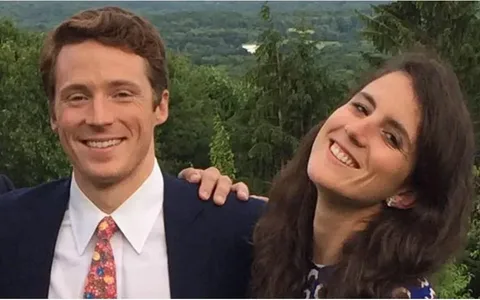
At Yale University, George excelled both academically and athletically. A member of the heavyweight rowing team, he eventually became a stroke seat—one of the most demanding positions in the boat—learning endurance, teamwork, and the quiet resolve required to show up every day no matter the conditions. He studied history but set his sights on medicine, a path that led him to Columbia University Vagelos College of Physicians and Surgeons, where he earned top honors and was elected to both the Alpha Omega Alpha Honor Medical Society and the Gold Humanism Honor Society.
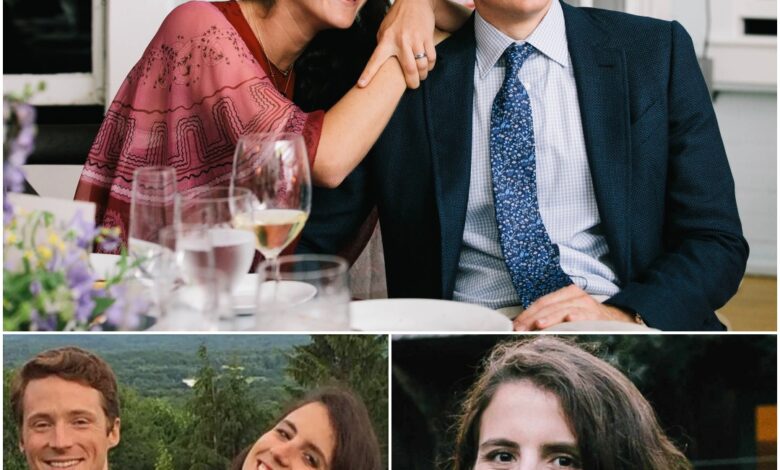
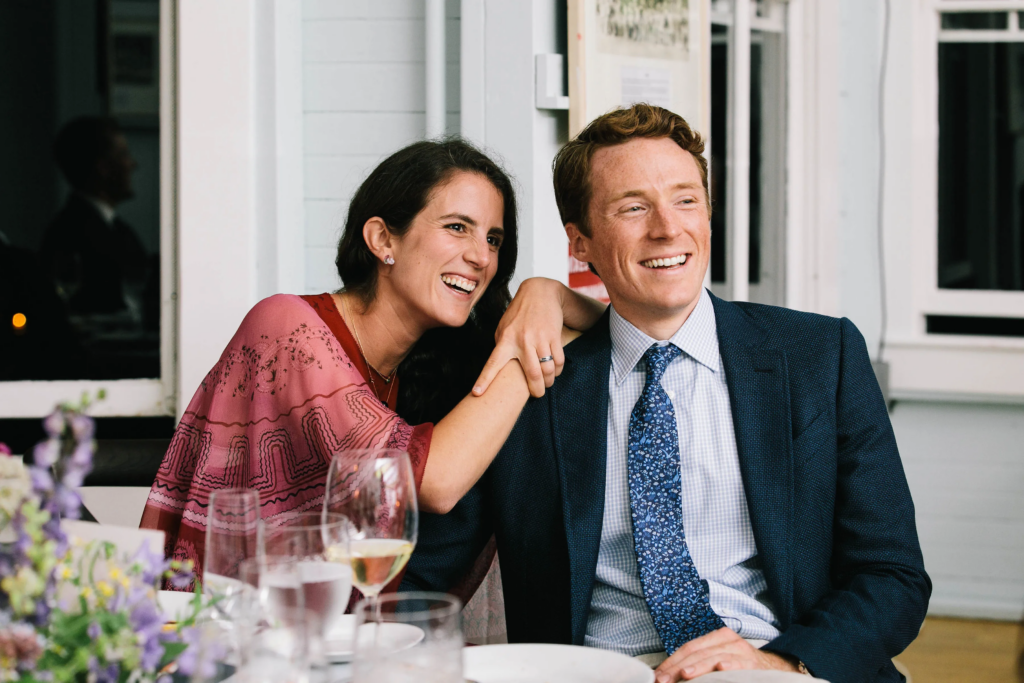
It was at Yale that George met Tatiana Schlöberg. Though her surname connected her to one of America’s most famous families—she was the daughter of Caroline Kennedy and the granddaughter of John F. Kennedy—Tatiana built her life deliberately apart from that legacy. A historian by training, she became an environmental journalist, writing for the New York Times and later authoring Inconspicuous Consumption, a critically acclaimed book that won the Rachel Carson Environment Book Award.
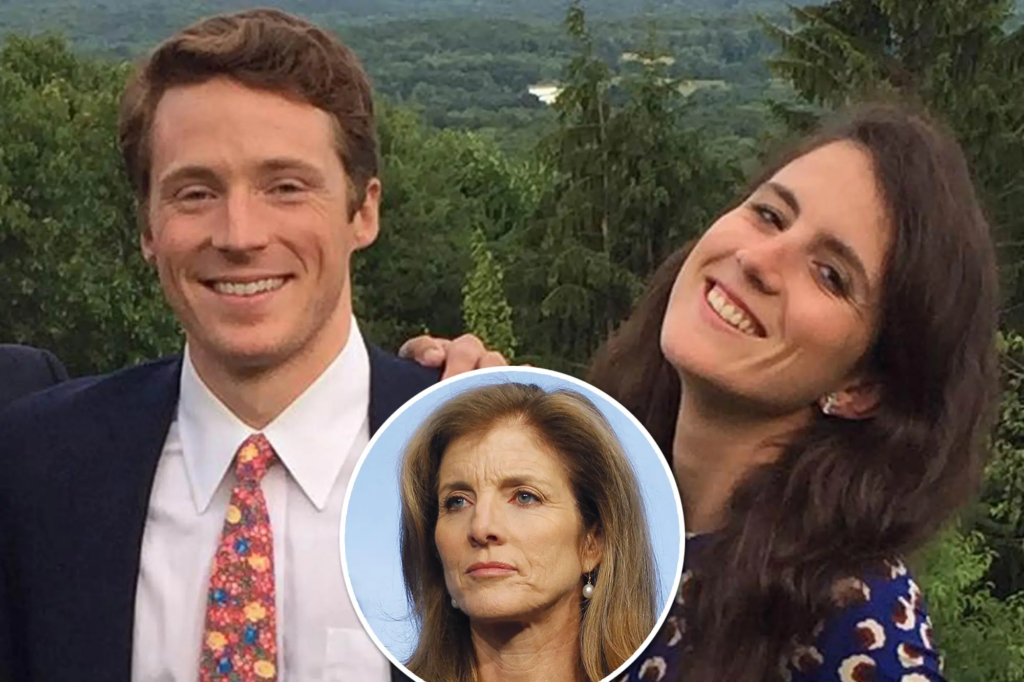
They married in 2017 at the Kennedy family estate on Martha’s Vineyard, a ceremony rich with history but defined by intimacy rather than spectacle. Their partnership was rooted in mutual respect, privacy, and shared values. In early 2022, they welcomed their son Edwin, and in May 2024, their daughter Josephine was born.
Hours after Josephine’s delivery, routine bloodwork revealed something deeply wrong. Tatiana’s white blood cell count was dangerously high. Doctors offered two explanations: a postpartum anomaly or leukemia. George, armed with years of training, desperately searched for a benign answer. None came.
The following 18 months became a relentless cycle of hospital rooms, chemotherapy, bone marrow transplants, and experimental treatments. Tatiana underwent two transplants—one donated by her sister Rose, and another from an anonymous donor. She enrolled in a CAR-T cell therapy clinical trial. Every available option was exhausted.

Throughout it all, George never left her side. Tatiana later wrote about those months in a deeply personal essay for The New Yorker, describing her husband sleeping on hospital floors, managing doctors and insurance companies, and enduring her steroid-induced anger without complaint. She recalled screaming at him over the wrong brand of ginger ale—Canada Dry instead of Schweppes—and how he absorbed the outburst silently, understanding it was the illness speaking, not the woman he loved.
While caring for Tatiana, George was also raising two young children, often alone. Infection risks meant Tatiana could not hold or care for her newborn daughter. George would put the children to bed, then drive back to the hospital to bring Tatiana dinner and sit beside her until morning. Love, in this story, was not dramatic speeches or grand gestures. It was presence. Relentless, exhausting presence.
In late 2025, complications mounted. Graft-versus-host disease set in. Viral infections attacked Tatiana’s kidneys and muscles, forcing her to relearn how to walk. Doctors eventually told her she had about a year left. Instead of retreating from the world, Tatiana chose to write. Her essay, published on November 22, 2025—the anniversary of her grandfather’s assassination—became one of The New Yorker’s most read pieces of the year.
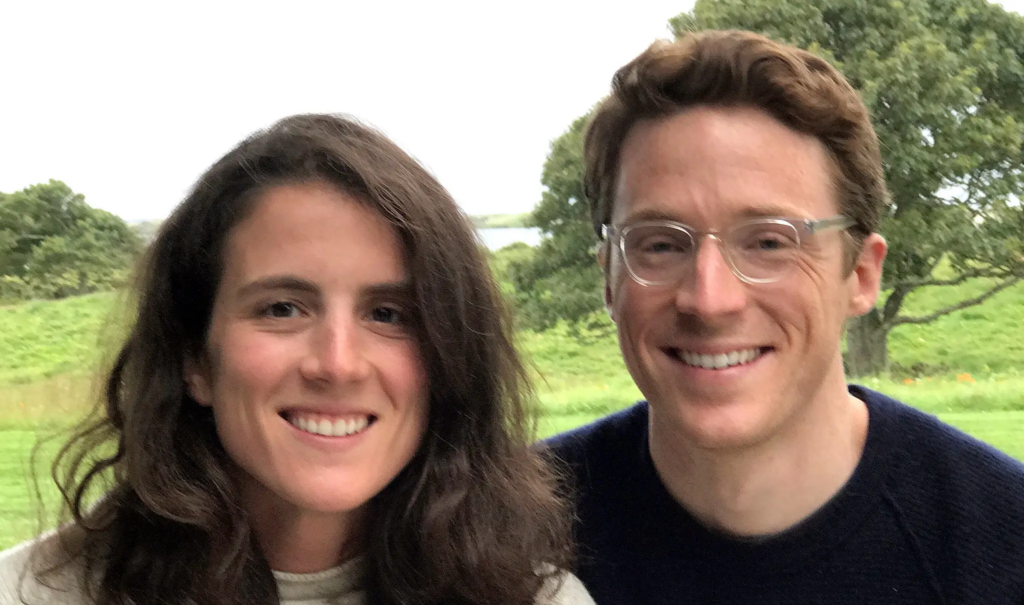
She wrote of grief not only for her own life, but for the future she and George would never finish together. She called him “perfect,” a “kind, funny, handsome genius,” and mourned the ordinary moments they would lose—shared dinners, raising children side by side, growing old.
On December 30, 2025, Tatiana Schlöberg died at 35 years old. George was 36. Their son was three. Their daughter was just 19 months old.
Today, George Moran continues his work as a urologist and professor, walking the same hospital corridors where his wife was diagnosed and treated. He is raising two children who will grow up knowing their mother through words, photographs, and stories. Medicine could not save Tatiana. But love, in its purest form, never left her side.
When science reaches its limits, presence remains. George Moran stayed. And now, he carries Tatiana forward—for their children, and for a life that ended far too soon.