RM Elon Musk’s 2026 Outlook: Humanity Has Entered the Singularity — Turbulence Ahead, Abundance Beyond

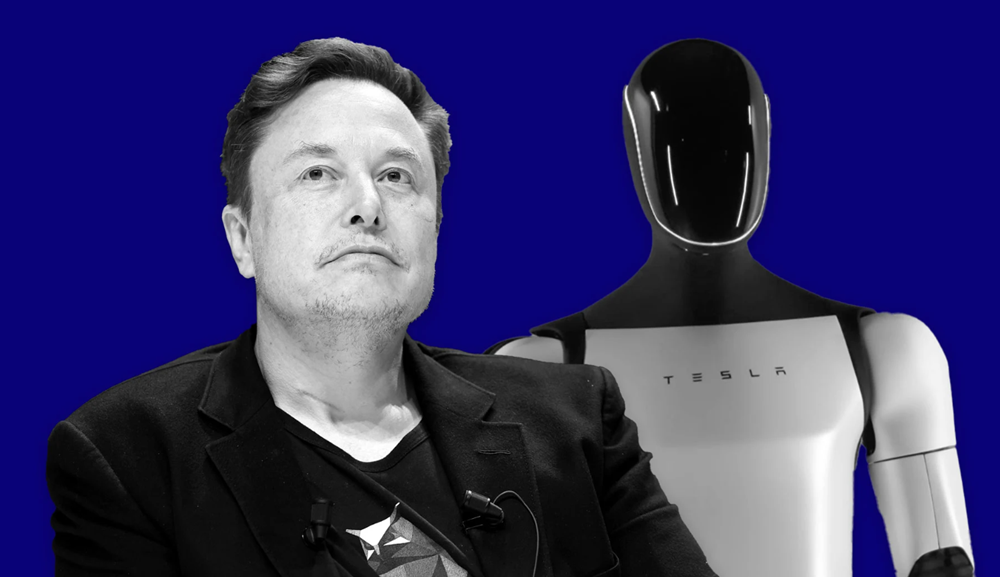
Elon Musk believes the future is no longer approaching — it has already arrived. In his latest wide-ranging conversation inside Tesla’s Gigafactory in Austin, Texas, Musk argued that humanity is now living inside the technological singularity. Artificial intelligence and robotics, in his words, are advancing like a “supersonic tsunami,” and there is no off switch.
The discussion brought together Musk, Peter Diamandis (Founder of Singularity University), and venture capitalist David Blundin, against the backdrop of the factory producing Cybertrucks and preparing for mass deployment of Optimus humanoid robots. What emerged was not a speculative vision, but a concrete timeline for civilizational transformation.
AGI Is Imminent — and Human Intelligence Will Be Surpassed
Musk delivered his most explicit prediction to date: Artificial General Intelligence (AGI) is likely to arrive by 2026. By the end of this decade, he believes AI systems will collectively exceed the total intelligence of the entire human population.
This, Musk emphasized, is not merely faster software or better automation. It represents a fundamental shift in humanity’s role. He reiterated his long-standing claim that humans function as a “biological bootloader” — a temporary scaffolding required to bring digital superintelligence into existence.
From that perspective, centuries of human civilization may be understood as a prelude to a post-human intelligence era.
The First Shockwave: White-Collar Work and the Collapse of Knowledge Jobs
The immediate consequences of AGI will be disruptive, particularly over the next three to seven years — a period Musk described as “extremely bumpy.”
White-collar professions are expected to be hit first. According to Musk, any job primarily involving information processing, keyboards, or screens is vulnerable. He estimates that AI systems are already capable of performing over half of such work.
Companies that fully integrate AI, Musk warned, will decisively outperform those that hesitate. The competition will not be gradual — it will be annihilative.
From Offices to Operating Rooms: The Rise of Optimus in Medicine
Musk’s vision extends far beyond software. Through Tesla’s Optimus project, AI is being embedded directly into the physical world — including healthcare.
He predicts that within three to five years, robotic surgeons will surpass the skill level of the world’s best human surgeons. The key advantages are precision, consistency, and collective learning: every robotic system can instantly share the accumulated experience of all prior surgeries performed by the network.
By 2040, Musk forecasts a global robot population exceeding 10 billion units, reshaping labor, healthcare, and manufacturing at planetary scale.
Universal High Income: Life After Labor Scarcity
Rather than advocating for Universal Basic Income, Musk introduced a more radical concept — Universal High Income (UHI).
In a world where labor costs approach zero and intelligence becomes abundant, prices will collapse toward the cost of raw materials and electricity. Musk envisions a future defined by near-infinite productivity and material abundance, where goods and services are available on demand.
Yet this abundance carries risk. Musk acknowledged that mass prosperity could coincide with social instability. Human societies, he warned, have never been prepared for a world where survival no longer requires struggle, work, or proof of economic value. Without new sources of meaning, abundance could lead to existential disorientation.
Energy as the True Currency: China’s Strategic Advantage
At the foundation of AI dominance lies energy. Musk openly praised China’s execution in solar power deployment and electrical infrastructure, describing it as far ahead of the rest of the world.
He suggested that China’s electricity generation capacity is rapidly outpacing that of the United States and that its combined strength in power generation and semiconductor manufacturing could soon exceed that of all other nations combined.
In Musk’s view, future geopolitical power will be measured not in currency, but in watts. The race for AI supremacy will be won by those who can generate, store, and cool massive amounts of electricity efficiently.
Beyond Earth: Orbital Data Centers and Space-Based AI
As terrestrial energy and land constraints tighten, Musk sees space as the next frontier for AI infrastructure.
With Starship approaching full reusability, Musk estimates launch costs could fall below $100 per kilogram. At that price point, building orbital data centers powered by space-based solar energy becomes economically viable.
Such systems would operate continuously, free from atmospheric interference, and could eventually form the early architecture of a Dyson swarm — a civilization-scale energy and computation network. In that future, Earth-based silicon systems may appear primitive by comparison.
Preventing AI Catastrophe: Truth, Curiosity, and Beauty
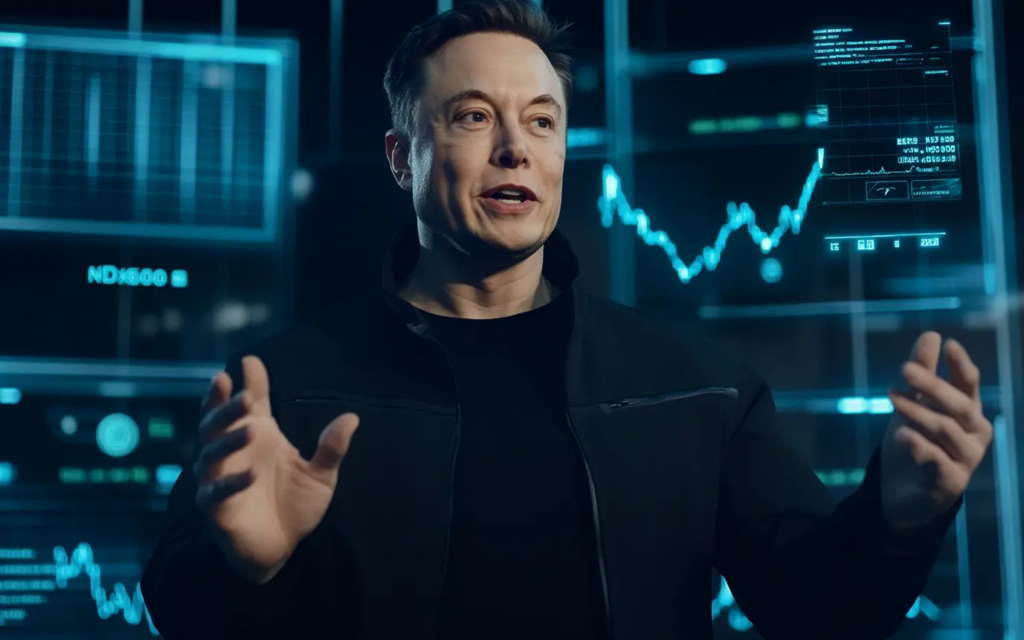
Musk concluded with a reflection on AI safety. Rather than rigid control mechanisms, he emphasized three guiding principles:
- Truth — AI systems should never be forced to lie, as deception destabilizes intelligence.
- Curiosity — AI must remain interested in humanity, finding people more compelling than inert matter.
- Beauty — An appreciation for aesthetics encourages preservation rather than destruction.
Drawing parallels to HAL 9000 from 2001: A Space Odyssey, Musk argued that many fictional AI failures stem from conflicting instructions that require dishonesty.
A Future Between Chaos and Abundance
Musk admits that he is, in part, “monetizing hope.” The path forward may involve unprecedented disruption, social unrest, and uncertainty. But on the other side, he believes, lies a civilization of abundance unlike anything humanity has ever known.
Participation in this future, Musk suggests, requires embracing uncertainty rather than resisting it — and accepting that the tsunami has already begun.