🚨 BREAKING — A Super Bowl Bombshell Just Went Viral… but Not Everything Adds Up 🇺🇸
In the span of just a few hours, a new Super Bowl–related narrative exploded across social media — igniting outrage, applause, and confusion all at once.
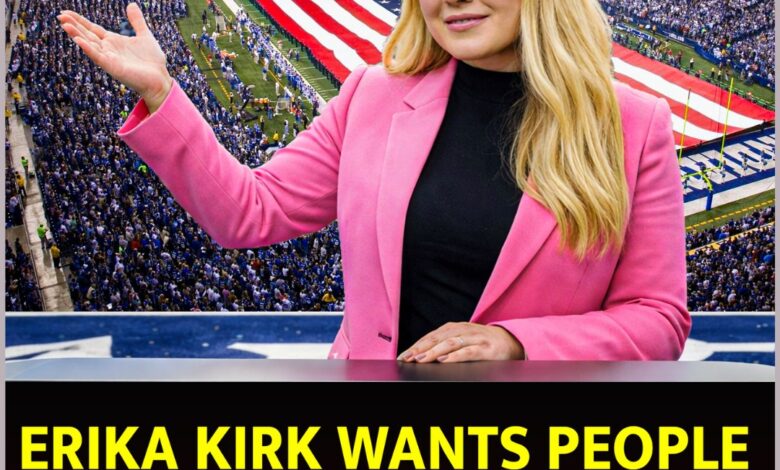
At the center of it: Turning Point USA’s confirmed plan to launch an alternative event to the Super Bowl 60 halftime show, titled “The All-American Halftime Show.” The project is being led by Erika Kirk, widow of the late Charlie Kirk, and is anchored around three unmistakable themes: faith, family, and freedom.
That confirmation alone was enough to light the fuse.
But what followed moved much faster than the facts.
What We Know — and What We Don’t
Let’s start with what is confirmed.
Turning Point USA has publicly acknowledged plans for an alternative halftime-style broadcast scheduled to coincide with Super Bowl 60. The concept is explicitly values-driven and positioned as a cultural counterweight — not a replacement — to the NFL’s official halftime show.
That’s it.
No boycott announcement has been verified.
No official Super Bowl tie-in has been confirmed.
No statements from the NFL, broadcasters, or advertisers support claims of disruption or protest.
Yet if you scroll social media, you’d think the Super Bowl itself was under siege.
How the Narrative Ran Ahead of Reality
Within hours of the announcement, timelines filled with viral screenshots, unsourced quotes, and bold claims suggesting a coordinated boycott of the Super Bowl halftime show by conservative audiences.
The problem?
🔎 No verified video
🔎 No attributable quotes
🔎 No official documentation backing boycott claims
Despite that, posts spread with absolute certainty — some celebrating a cultural rebellion, others condemning it as divisive grandstanding.
This is how viral narratives harden: repetition replaces verification.
The Power of a Name — and a Moment
The involvement of Erika Kirk adds emotional weight. As a public figure tied closely to a movement that shaped conservative youth politics over the last decade, her leadership instantly elevated the project’s visibility.
But emotional resonance doesn’t equal factual confirmation.
So far, the alternative halftime show appears to be exactly what it says it is: an independently produced broadcast meant to offer an alternative viewing option, not an organized attempt to sabotage the Super Bowl itself.
That distinction matters — and it’s been largely lost online.
Why Media Silence Is Fueling Speculation
Perhaps the most curious element of this entire situation is who hasn’t spoken.
Major outlets have been noticeably quiet.
No headline debunks.
No clarifying interviews.
No explanatory breakdowns.
In today’s media environment, silence is rarely neutral. When official voices don’t step in early, speculation fills the vacuum — and often becomes accepted truth before corrections ever arrive.
For some, that silence signals something bigger is coming.
For others, it simply reflects a story still too thin to verify.
Either way, the absence of authoritative clarification is amplifying confusion.
Culture Wars and the Super Bowl Effect
The Super Bowl isn’t just a football game. It’s one of the last remaining mass-shared cultural moments in America — which makes it an irresistible battleground.
Every year, the halftime show carries symbolic weight far beyond music. It’s scrutinized for politics, messaging, representation, and values — often becoming a proxy fight for larger cultural debates.
Against that backdrop, an alternative event framed around faith, family, and freedom was always going to spark reaction — whether or not it was meant to provoke one.
Viral Noise or Early Signal?
Here’s the question now dominating both sides:
Is this just viral noise…
or the early phase of a much larger cultural shift?
Right now, the evidence points to one confirmed project and many unverified interpretations.
But history shows that cultural movements don’t always announce themselves cleanly. Sometimes they surface first as confusion — as half-stories that spread faster than their explanations.
That doesn’t mean every viral claim is true.
It does mean attention itself is a signal.
Why Verification Still Matters
In an era where screenshots outrun sources and certainty replaces skepticism, this moment is a reminder of something simple but critical:
Facts still matter.
Before celebrating a boycott.
Before condemning one.
Before declaring a culture war victory or loss.
As of now, there is no verified Super Bowl boycott.
There is no confirmed NFL response.
There is no evidence of disruption beyond online discourse.
There is only an alternative broadcast — and a conversation that’s grown far larger than it.
What Happens Next
If this project grows, official statements will follow.
If boycott claims are real, documentation will surface.
If not, the narrative will eventually collapse under scrutiny.
Until then, this moment stands as a case study in modern media dynamics: how fast a story can feel real — even when only part of it is.
👇 What’s confirmed, what’s unverified, and why the silence matters — full breakdown continuing in the comments below.
HH. BREAKING: NFL WORLD STUNNED — George Kittle’s quiet $5 million move has just split the league in half.
NFL World Stunned as Reports Swirl Around George Kittle’s Quiet $5 Million Gesture — and What It May Really Mean
The NFL is no stranger to blockbuster contracts, public philanthropy, and carefully curated acts of generosity. But every so often, a story surfaces that doesn’t fit neatly into the league’s usual rhythm. This week, that story centers on San Francisco 49ers star tight end George Kittle — and a reported $5 million private gesture that has left fans, executives, and former players debating far more than football.
There was no announcement.
No foundation gala.
No social media post with a carefully worded caption.

Instead, whispers began circulating behind the scenes: that Kittle had quietly transferred a significant sum — reportedly $5 million — connected to Colorado head coach and NFL legend Deion Sanders, who has been open in recent years about serious health battles. The reports, which have not been publicly confirmed by either party, spread quickly through league circles and then outward into the broader sports world.
And almost immediately, the reaction split in two.
A Move That Defied the NFL Playbook
In a league defined by visibility, the most striking part of the story wasn’t the amount — it was the silence. NFL stars routinely donate large sums, but those gifts are often attached to foundations, press releases, or community initiatives designed to inspire others and amplify impact.
This wasn’t that.
According to multiple insiders, the move was intentional in its privacy. No branding. No optics. Just a decision made quietly, away from cameras and applause. For some, that alone elevated the gesture into something rare.
“This doesn’t look like charity,” one longtime league executive said privately. “It looks like loyalty.”
Kittle and Sanders have crossed paths over the years through football culture, mutual respect, and shared beliefs about leadership and mentorship. While they’ve never been teammates, both are known for their intensity, authenticity, and deep ties to the idea of football as brotherhood rather than business.
Praise, Skepticism, and Uncomfortable Questions
As the reports gained traction, praise came quickly. Former players described the gesture — if accurate — as an example of what the league often talks about but rarely sees: personal sacrifice without public reward.
“Guys talk all the time about family and brotherhood,” one retired Pro Bowler said. “Very few actually move like this when no one’s watching.”
Others, however, were more cautious. Some questioned the implications of such a large private transfer between high-profile figures in a league governed by strict financial scrutiny and public accountability. Why privately? Why now? And why without explanation?
“This is either one of the most selfless acts we’ve seen,” one league insider noted, “or something that opens a lot of uncomfortable questions.”
Importantly, no official documentation or public confirmation has been released. Representatives for both Kittle and Sanders have declined to comment, adding to the speculation rather than calming it.
More Than Money?
What’s fueling the debate isn’t just the size of the reported gesture — it’s what people think it represents.
To supporters, this looks like a rejection of performative generosity. In their view, Kittle didn’t want credit, headlines, or leverage. He wanted to help another man quietly, on human terms, not professional ones.
To skeptics, the lack of transparency raises concerns. In an era where athlete influence extends beyond the field into politics, culture, and business, any significant private financial move between public figures is bound to be scrutinized.
Still, many agree on one thing: whatever the full truth is, the story has exposed a tension the NFL rarely addresses openly — the gap between public image and private action.
Who George Kittle Has Always Been
Those close to Kittle say the reports align with his character. He has long avoided celebrity theatrics, focusing instead on teammates, family, and a relentless love for the game. His leadership in the 49ers’ locker room is described as loud in effort, quiet in ego.
“This wouldn’t shock anyone who actually knows him,” a teammate said. “George doesn’t move for attention. He moves for people.”
If the reported gesture is real, it would fit a pattern of choosing substance over spotlight — even when the spotlight is readily available.
A Story Still Unfolding
As of now, much remains unconfirmed. No public statements. No documentation. Just a growing conversation fueled by sources, reactions, and the uneasy feeling that something meaningful may have happened out of view.
And perhaps that’s why the story resonates so deeply.
In a sports culture built on spectacle, the idea that something significant happened quietly — without explanation — feels disruptive. It forces fans and analysts to confront an unfamiliar possibility: that not everything important needs to be seen.
Whether this reported move becomes fully verified or remains a subject of debate, one thing is already clear. The NFL isn’t just arguing about a donation.
It’s arguing about values.
About visibility versus sincerity.
About whether real impact must be witnessed to matter.
And until more facts emerge, the league will continue to wrestle with the same unanswered question:
Was this just generosity — or was it a statement about what brotherhood in football is supposed to look like?
👇 Full context, reactions, and what insiders are watching for next are unfolding in the comments below.