Cowboys Close the Season in Chaos — And Dak Prescott’s Blunt Comment Says It AllAnother loss. Another disappointment. And one raw moment that perfectly summed up Dallas’ broken 2025 campaign…1805

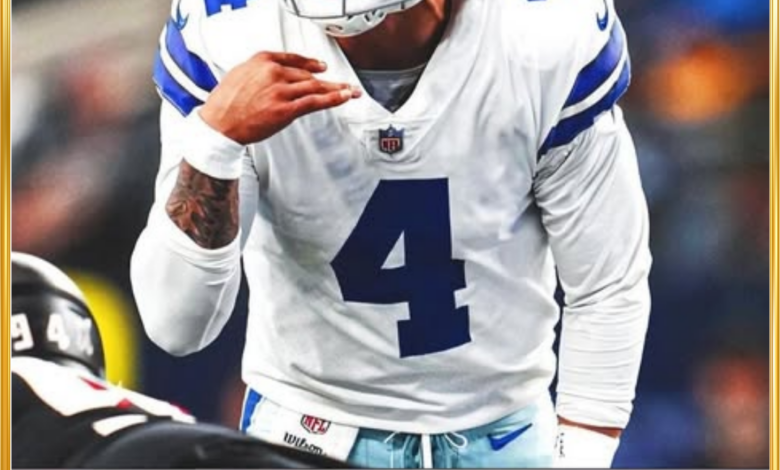
Dallas closed out the 2025 NFL season with a poor defeat to the New York Giants
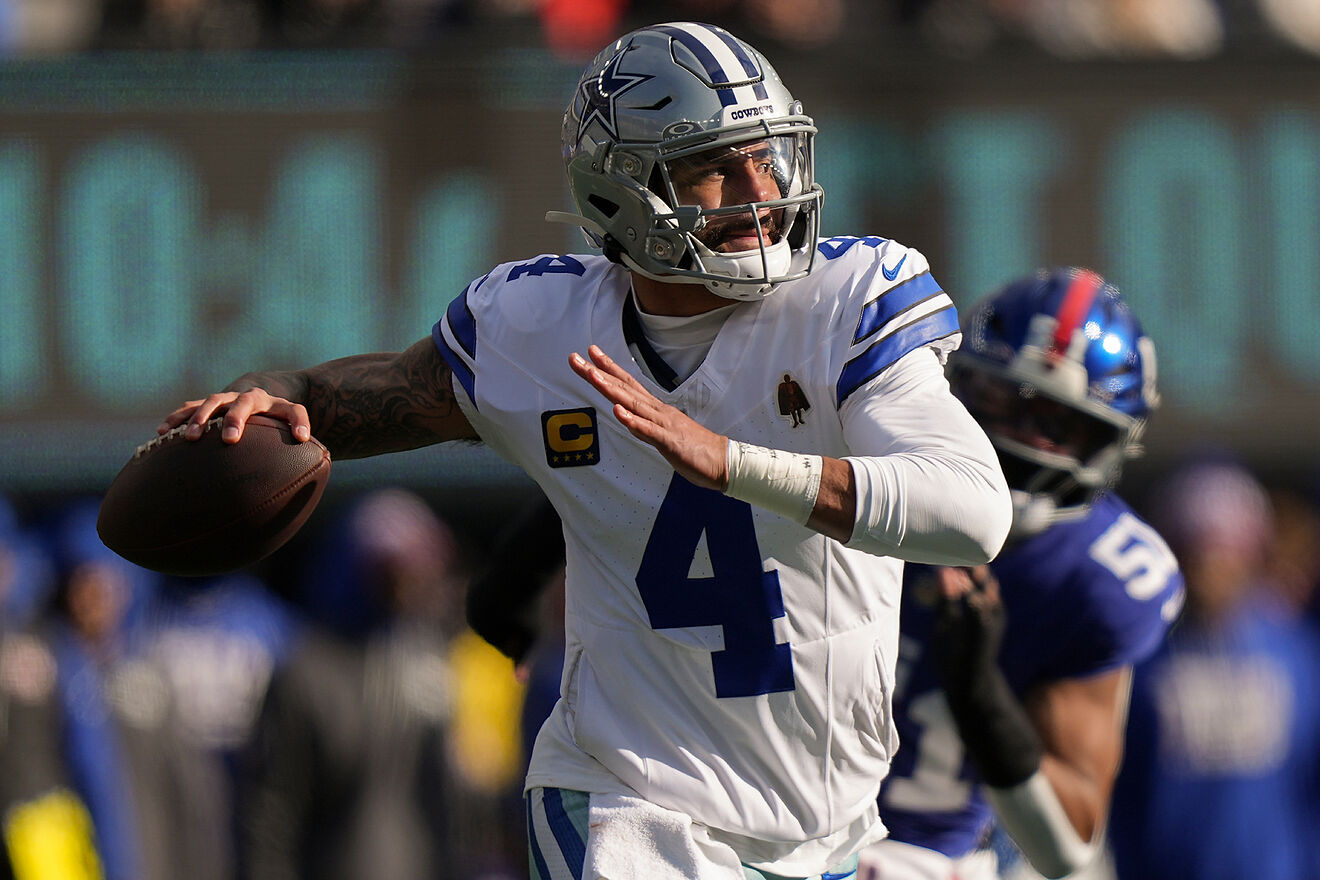
Dak PrescottFrank Franklin IIAP/LAPRESSE
The Dallas Cowboys closed the 2025 NFL season exactly as it had unfolded for months, with frustration, mistakes, and unmet expectations, as a Week 18 loss to the New York Giants sealed a campaign that never really got going.
Because Dallas entered the finale already long eliminated from playoff contention, pride was the only remaining incentive, yet the afternoon quickly unraveled, reinforcing how penalties, turnovers, and emotional lapses consistently outweighed execution.
Dak Prescott looks defeated after another disappointing season
But as the Giants built a two-score lead in the second half, the familiar issues resurfaced, and the game began to mirror the Cowboys‘ broader struggles, where self-inflicted damage routinely erased opportunities to regain momentum.
New York‘s quarterback, Jaxson Dart, found Tyron Tracy Jr. for a 13-yard touchdown, and immediately after, tensions boiled over, leading to a midfield scrum that ended with the Cowboys defender’ Donovan Ezeiruaku being ejected.
That sequence, marked by Ezeiruaku removing a Giants player’s helmet, symbolized a season plagued by poor discipline, as emotional reactions repeatedly replaced composure during critical moments.
Consequently, Dallas‘ inability to manage pressure became its defining trait, making even competitive stretches feel fragile and short-lived throughout a year that began with legitimate postseason hopes.
And following the loss, Dak Prescott addressed reporters and, rather than deflecting or reframing the outcome, delivered an unfiltered assessment that instantly resonated because of its blunt honesty.
“Oh s**t,” Prescott said. “That’s a good sound clip for the season.”
The comment, while brief, cut through the noise, because it reflected both locker-room frustration even if, statistically, Prescott‘s season told a very different story, as he surpassed 4,000 passing yards for the fourth time, finishing with 4,552 yards and 30 touchdowns.
Moreover, he entered the finale leading the NFL in passing yards, completions, and attempts, demonstrating how individual production once again failed to translate into meaningful team success as the defense continued to struggle.
As a result, Dallas now faces another offseason defined by strong numbers but empty results, extending a pattern that has kept the franchise stuck short of contention.
Jerry Jones risks Micah Parsons repeat with George Pickens
Beyond the loss itself, questions about the Cowboys‘ future have intensified, starting with Prescott‘s looming 2026 cap hit of more than $74 million, which effectively locks Dallas into its current path.
At the same time, uncertainty surrounds their emerging star wide receiver, George Pickens as despite his standout season of 92 receptions, 1,420 yards, and nine touchdowns, production that makes his future critical.
And the franchise owner, Jerry Jones, offered little clarity, signaling hesitation about a return while reiterating his preference for direct negotiations, a stance that has previously strained relationships with star players. “I don’t know,” Jones said on 105.3 The Fan.
“We’ll see how it goes. Probably both, but I certainly intend to be speaking with George.” That philosophy mirrors the approach used earlier with Micah Parsons, a situation that escalated and ultimately ended with the All-Pro defender leaving Dallas, raising concern about repeated missteps.
Complicating matters further, financial limitations loom large, as Spotrac reports the Cowboys must create $23,930,920 in cap space, restricting flexibility during a pivotal offseason in which offense might not be the priority in the race to the Super Bowl.
NFL IN UPROAR: TOM BRADY’S LIVE-TV ACCUSATION AFTER STEELERS–RAVENS IGNITES A CRISIS OF TRUST
The cameras were still rolling when the tone shifted from analysis to indictment.
On live television, Tom Brady leveled one of the most forceful on-air critiques of officiating the league has heard in years—arguing that questionable calls didn’t merely interrupt play, but reshaped the outcome of the Pittsburgh Steelers’ 26–24 victory over the Baltimore Ravens.
Brady dismissed the idea that the decisions were simple errors. In his words, they amounted to direct interference—flags that flipped momentum, erased scoring chances, and seized control of the game at its most decisive points. He went further, calling for an immediate league review of three pivotal moments, warning that when officiating repeatedly influences results, the NFL’s credibility itself is at risk.
The clip detonated across social media. Fans froze, analysts scrambled, and the league’s long-simmering officiating debate burst back into open flame.
WHY THIS COMMENT HIT DIFFERENT
Criticism of referees is routine. What made this moment seismic was who delivered it—and how.
Brady is not known for hot takes. He is associated with preparation, restraint, and precision. When someone with seven Super Bowl rings and two decades inside the league claims interference—not incompetence—it lands with unusual force.
Viewers didn’t hear frustration; they heard conviction.
THE GAME THAT BECAME A FLASHPOINT
Steelers–Ravens is never just another matchup. It’s an AFC North collision defined by physicality, thin margins, and playoff implications. In such games, one call can swing the night.
According to Brady, the problem wasn’t a single whistle. It was a pattern—calls at leverage points that stalled drives, reversed field position, and altered late-game calculus. The accusation reframed the contest from football outcome to process integrity.
That distinction matters.
“ERROR” VS. “INTERFERENCE”: A CRITICAL LINE
The NFL has long defended officiating mistakes as part of the human element. Brady challenged that framing.
Errors are isolated and random.
Interference, as Brady described it, is systemic impact—repeated influence at decisive moments.
Fans seized on that difference. If outcomes are shaped by patterns of enforcement rather than performance, the foundation of competitive trust cracks.
THE THREE MOMENTS UNDER THE MICROSCOPE
While the league has not publicly itemized Brady’s requested review points, fans and analysts quickly zeroed in on late-game flags, non-calls in high-leverage downs, and sequences where momentum visibly swung.
Supporters of Brady’s stance argue:
Timing matters as much as accuracy.
Consistency must hold under pressure.
Late-game standards should not shift.
Critics counter:
Slow-motion replay distorts real-time judgment.
Physical rivalries generate borderline contact.
Cherry-picking moments fuels confirmation bias.
The argument split cleanly—and loudly.
FANS REACT: FROM ANGER TO SKEPTICISM