kk.BEFORE THE HEADLINES HARDEN: THE CLEAN TIMELINE OF TATIANA SCHLOSSBERG’S DEATH (SO FAR)

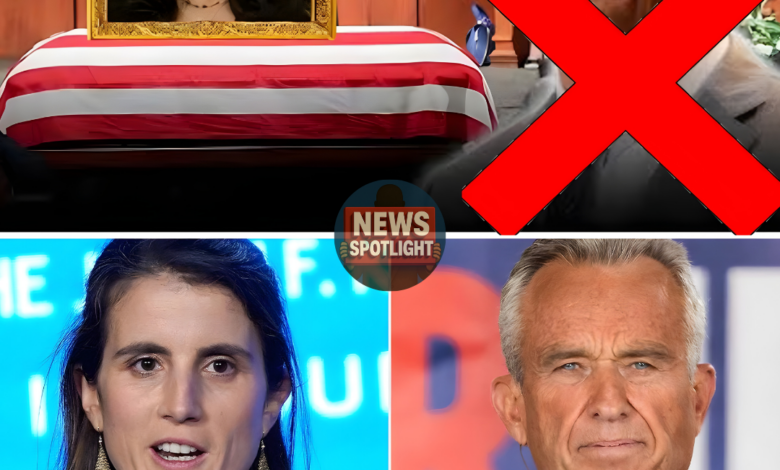

Before the Headlines Harden: The Clean Timeline of Tatiana Schlossberg’s Death (So Far)
There are losses that feel heavy even when you never met the person. Not because you knew her, but because the story pulls a thread you recognize: a young parent, a serious illness, and a family trying to grieve while the public keeps leaning in.
Tatiana Schlossberg was 35 when she died on Tuesday, December 30. She was the daughter of Caroline Kennedy and Edwin Schlossberg, the granddaughter of John F. Kennedy, and a writer whose work often sat in the overlap between public responsibility and private conscience. She was also, in the simplest and most important sense, a wife and a mother. She leaves behind her husband, George Moran, and two young children.
In the days after her death, the internet moved in its usual two directions at once: toward sympathy and toward speculation. The sympathy is easy to understand. The speculation is, too, even if it isn’t always kind. People want a clear reason. They want a statement that resolves the discomfort of not knowing. They want grief to come with a neat explanation.
But families rarely grieve neatly, and they almost never grieve on a schedule that matches a headline cycle.
What’s publicly clear is the outline. Tatiana had been living with acute myeloid leukemia, a blood cancer she was diagnosed with in May 2024, shortly after the birth of her second child. In November 2025, she published an essay describing the shock of diagnosis, the intensity of treatment, and the haunting reality of trying to mother young children while also preparing for the possibility that they might not remember her.
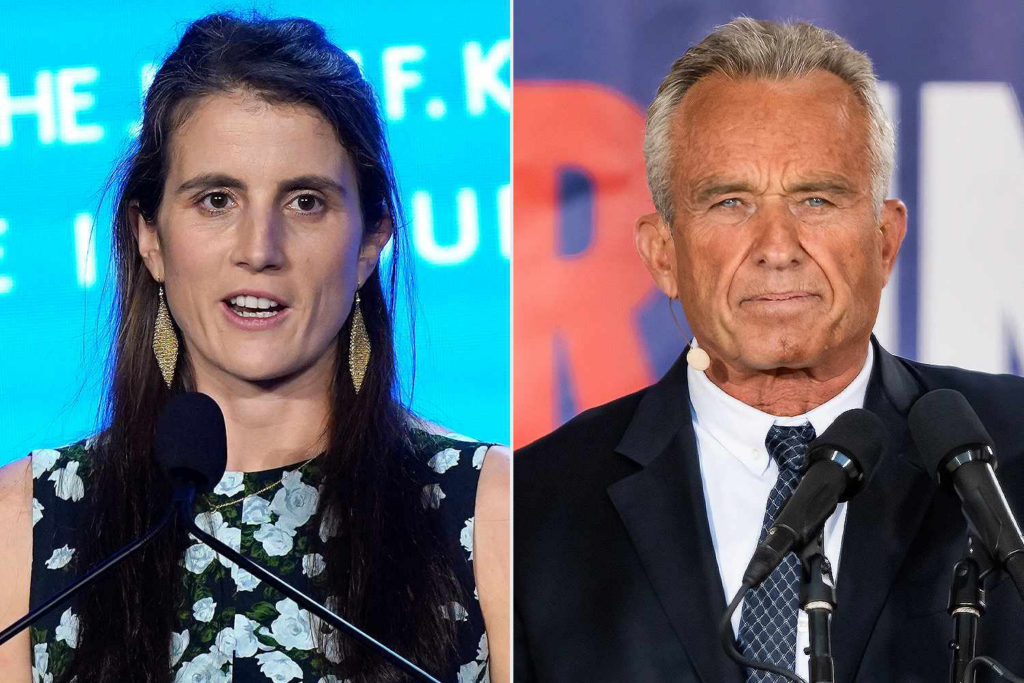
That essay did something else that now matters in the way people interpret the family dynamics around her death: it named a conflict inside a famous family. Tatiana criticized Robert F. Kennedy Jr., her cousin, who is serving as the Secretary of Health and Human Services. She wrote about watching policy decisions in real time while she was sitting in hospitals, reliant on medicine and research and the people who devote their lives to keeping others alive. Her words were pointed, personal, and political.
This is where the story becomes difficult to hold with care. Because once grief touches a well-known family, everything becomes an “angle.” Every relationship becomes a possible storyline. Every silence becomes suspicious. And the more famous the last name, the more strangers feel entitled to treat mourning like a public narrative with a cast list.
Tatiana’s family announced her death with a short statement and signatures that read like a circle drawn tight around the people closest to her: George, Edwin and Josephine Moran; Ed, Caroline, Jack, Rose and Rory. The message was simple: “Our beautiful Tatiana passed away this morning. She will always be in our hearts.” There was no long explanation. No details about a funeral. No invitation for the public to participate in the grief.
And that’s where the “so far” timeline stops being about medical facts and starts becoming about what people project onto the spaces between them. In those spaces, the internet is already forming theories about what happened in her final months, what conversations were left unfinished, and how the family is choosing to manage the attention that follows any Kennedy tragedy.
Another detail that keeps surfacing in reports is the practical, unglamorous reality of what happens after a death like this. There are two children who still need breakfasts, baths, school drop-offs, and a parent who is grieving while parenting. There is a brother, Jack Schlossberg, who people say has been trying to hold the line for the family—showing up, helping, absorbing pressure that doesn’t fit into a caption. That kind of support is rarely visible, but it is often what keeps a family upright. If you’ve ever watched grief up close, you know the look: composure that costs everything. In moments like this, the quiet work of caregiving becomes the family’s real memorial, daily.
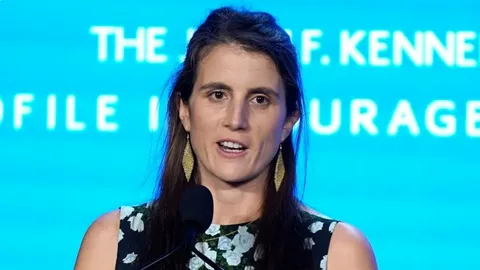
One specific claim has started to spread quickly: that Robert F. Kennedy Jr. will not be invited to Tatiana Schlossberg’s funeral, supposedly because Caroline Kennedy and Edwin Schlossberg want to avoid extra scrutiny or controversy while they protect their grandchildren and hold the family together. Some versions of the story say the decision is “intentional.” Others frame it as a quiet boundary, an attempt to grieve without turning the service into a political event.
Here’s the problem: at the moment, that claim exists mostly as an unnamed-insider narrative. It may be true. It may be exaggerated. It may be incomplete. The family has not publicly confirmed funeral details, guest lists, or exclusions. And in the absence of official clarity, the internet is doing what it always does: treating rumor like a finished fact.
There is a bigger truth underneath the gossip, and it doesn’t require a villain. In a family facing a death at 35, with two small children in the center of the aftermath, “protective” is not a strategy. It’s a human reflex. People pull in. They minimize noise. They try to keep the grief from becoming a spectacle.
If there is tension inside this family, it is not shocking. Tatiana’s essay was not written to entertain, and her illness was not a plot twist. It was an honest record of what it feels like to watch your own future narrow. It is possible that some relatives read it as necessary truth. It is also possible that others felt wounded by how public it was. Both things can be real at the same time.
Start with what can be said without reaching. Tatiana Schlossberg’s death has been publicly acknowledged by her family, and the basic facts around her illness have been described by Tatiana herself. She wrote that she was diagnosed with acute myeloid leukemia with a rare mutation in late May 2024, right after giving birth. She described chemotherapy, relapse, transplant plans, complications, and the brutal uncertainty of time. She wrote about watching her children grow while she was losing strength, and about the particular fear that her youngest might not remember her as a mother at all.
That is not “celebrity news.” It is a parent writing from inside a crisis.
The other confirmed piece is the family structure that grief now has to fit around. Tatiana was married to George Moran. She had two children. Her parents are Caroline Kennedy and Edwin Schlossberg. Her siblings include Jack Schlossberg and Rose Schlossberg. Those names matter because this is not just a famous family; it is a family with small kids in the center, and the aftermath will be lived in bedtime routines, doctor calls, and the kind of quiet paperwork nobody posts about.
The public narrative, however, tends to chase sharper edges. It looks for conflict, because conflict creates a storyline people can follow. And in this case, the sharp edge is Robert F. Kennedy Jr.
Tatiana’s essay did not treat Robert F. Kennedy Jr. as a distant relative. It treated him as a public official whose decisions could affect the health-care system she was depending on. She wrote about watching him be nominated and confirmed as Secretary of Health and Human Services while she was in treatment. She wrote about vaccine skepticism, funding cuts, and the chilling feeling of relying on a system that suddenly seemed unstable. Whether a reader agrees with her politics or not, her point was rooted in a lived experience: it is different to debate policy in the abstract than to debate it from a hospital bed.
Once those words were published, people began interpreting family relationships through that lens. It is easy, from the outside, to turn relatives into teams. It is easy to assume that every holiday table becomes a political battlefield. But real families are rarely that simple. People can disagree fiercely and still be related. They can also stop speaking, not because they are dramatic, but because they are exhausted.
Now, the rumor that has gained traction: that Robert F. Kennedy Jr. will not be invited to Tatiana Schlossberg’s funeral, and that Caroline Kennedy and Edwin Schlossberg made that choice to protect their grandchildren from extra attention and controversy. Some versions say they are being “deeply protective.” Some say they want no drama. Some say the goal is to keep a farewell from becoming a political spectacle.
None of those claims have been confirmed publicly by the family. Funeral plans have not been laid out in an official way. Guest lists are not public documents. So the responsible way to hold this is to label it clearly: it is an allegation, attributed to unnamed sources, that may reflect reality, may reflect partial truth, or may reflect the storytelling needs of the media ecosystem.
Still, even as an allegation, it tells you something about the moment we are living in. In 2026, a private funeral can become a referendum. A family can’t simply mourn; it must anticipate cameras, commentary, and the possibility that one controversial attendee changes the headline from “mother dies at 35” to “political feud erupts at funeral.” That is an unfair burden, but it is a predictable one.
If Caroline Kennedy and Edwin Schlossberg truly are restricting attendance, that is not automatically a snub. It can also be a boundary: immediate family, close friends, and the people who will still be there when the news cycle moves on. The children’s stability comes before the public’s curiosity. A family’s need for quiet comes before anyone else’s desire to witness grief.
There is another detail floating around: that Jack Schlossberg has been seen in New York looking strained while helping George Moran care for the children. Again, the emotional core of that claim feels plausible, but the specifics are not something the public can verify easily. Even if it is accurate, it is also something that should be held gently. Being photographed while barely holding it together is not a public service. It is a human being in the middle of an unthinkable week.
This is the collision: public family, private devastation.
One way to keep this from turning into rumor soup is to separate the categories of information.
Category one: what Tatiana wrote herself. She described the diagnosis, the mutation, the treatments, and the fear. She described her love for her children and the weight of feeling like she was adding a new tragedy to her mother’s life. Those are not rumors; they are her own words.
Category two: what has been publicly stated by the family. The family announcement was short. It said she passed away and would always be in their hearts. It did not invite a debate. It did not list funeral plans. It did not offer a political comment. The tone was love, not spectacle.
Category three: what is being inferred. People infer that the family is divided, because Tatiana criticized Robert F. Kennedy Jr. People infer that Robert F. Kennedy Jr. would be an unwanted presence at a private service, because his public role brings press. People infer that the funeral would attract extra attention in a way that could overwhelm the children. These inferences might be reasonable, but they are still inferences.
Category four: what is being alleged without verification. That Robert F. Kennedy Jr. was explicitly not invited. That the decision was communicated as a protective move. That the reason is to avoid controversy. That Jack Schlossberg is acting as a visible caretaker. These may be true, but they remain claims from unnamed sources.
Once you lay it out that way, the real story becomes clearer. The real story is not “who got invited.” The real story is a woman who knew she was dying and chose to write honestly, and a family now trying to keep the most vulnerable members protected while the world watches.
It is also a reminder of how modern grief gets distorted. The internet does not handle ambiguity well. When facts are limited, people fill the gap with certainty because certainty performs better than patience. And when a famous name is involved, people feel justified in pulling a family’s private decisions into the public arena.
There is a version of this story that treats funerals like red carpets: who attended, who didn’t, who stood near whom. That version is easy to post. It is also shallow. It is the opposite of what Tatiana wrote about, which was the depth of being human when your body is failing and your love for your children becomes both anchor and ache.
If you want to write about this responsibly, focus on the pieces that are actually useful.
Useful: that acute myeloid leukemia can move brutally fast, even in a young, active person. Useful: that postpartum medical changes can hide serious conditions, and that close monitoring matters. Useful: that people facing serious illness often think first about their children, not their public image. Useful: that research, funding, and medical infrastructure are not abstract concepts when you are the patient.
Not useful: turning a funeral into a political scoreboard.
The rumor about Robert F. Kennedy Jr. not being invited might end up being confirmed, or it might fade, or it might be replaced by a different rumor. But the lasting truth is simpler: boundaries during grief are not cruelty. They are oxygen.
A final thought, because it’s the part social media forgets. When someone dies at 35, you don’t only lose a person. You lose the future versions of that person. You lose the older mother, the older sister, the older friend. You lose the conversations that would have happened when the kids were teenagers, and when the kids were grown. The people closest to Tatiana Schlossberg are not just mourning her past; they are mourning everything she will never get to be.
That is why a family might choose privacy over openness, and why they might keep a funeral small, even if the world wants access.
If you’re reading this as a spectator, you can still do something decent. Speak with restraint. Label rumors as rumors. Don’t share “insider” claims as if they are court transcripts. Don’t treat a child’s worst week as public entertainment. And if you feel compelled to take a lesson, let the lesson be about gentleness, not about gossip.
Tatiana Schlossberg wrote from inside the hardest kind of honesty: knowing time is limited and still trying to protect the people you love. Whatever else is said, that is the part worth carrying forward.
Here is the cleanest timeline people have been piecing together, without pretending it explains everything.
May 2024: Tatiana Schlossberg gives birth and is diagnosed with acute myeloid leukemia soon after. Treatment begins, and life becomes a cycle of hospitals, medication, and waiting.
November 2025: She publishes a personal essay about her illness, her children, her fear, and the way public policy feels different when you are the patient. She names Robert F. Kennedy Jr. directly, criticizing his actions as Health and Human Services Secretary.
December 30, 2025: The family announces that Tatiana Schlossberg has died at 35. The statement is brief, signed by immediate family, and focused on love rather than details.
Afterward: Public memorials remain limited. Tribute posts appear from relatives and friends. But funeral plans, if any, are not publicly outlined.
That gap—between announcement and the private rituals that follow—is where rumor thrives. In the absence of a public schedule, some people assume secrecy must hide conflict. But a quiet funeral is not evidence of a feud. It can simply be the most humane choice for two small children.
The “not invited” claim about Robert F. Kennedy Jr. fits neatly into a preexisting storyline: that the Kennedy family has been divided, that Tatiana’s criticism deepened it, and that the funeral becomes the next battlefield. It’s a dramatic script, and that is exactly why it spreads. Dramatic scripts travel faster than the boring truth that grief is mostly paperwork, casseroles, and exhaustion.
Still, the allegation raises a practical question worth considering: what happens if a high-profile political official attends a private funeral? Even if he arrives quietly, he can bring security protocols, press interest, and opportunistic commentary. People could show up to protest, to film, or to chase a photo. A family trying to mourn could end up managing logistics instead of emotions.
So if Caroline Kennedy and Edwin Schlossberg decided to keep attendance very small, it would not be “drama.” It would be risk management in the plainest sense: reducing variables on a day already unbearable.
There is also a human layer that doesn’t need any insider quotes. Tatiana wrote about trying her whole life to be “good” and to protect her mother, and about the pain of feeling she was adding another tragedy to a family history already crowded with loss. When you read that, you can see why her parents might become protective to the point of strictness. You can also see why siblings might close ranks around the children. When grief arrives, people either scatter or they hold on hard.
None of this proves who will or won’t be invited to anything. It simply explains why the most believable version of events is also the quietest one: a family protecting kids, keeping the circle small, and refusing to let public conflict set the tone for a private farewell.
And if, in time, the family says nothing more, that is not a gap we get to fill. The dead are not public property. Neither is the grief of Caroline Kennedy, Edwin Schlossberg, George Moran, Jack Schlossberg, or the children at all.