kk.RFK Jr. Reportedly Barred From Cousin Tatiana Schlossberg’s Funeral Amid Intensifying Kennedy Family Rift

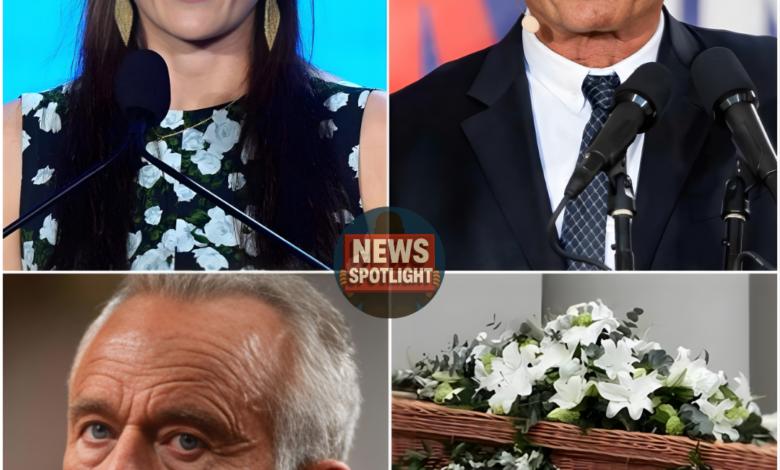

A new chapter in the long-running Kennedy family feud has reportedly unfolded in the wake of the death of Tatiana Celia Kennedy Schlossberg, an environmental journalist and the granddaughter of President John F. Kennedy, who died on December 30, 2025, at age 35 after a battle with cancer. According to accounts citing unnamed insiders, Robert F. Kennedy Jr.—now serving as Secretary of Health and Human Services in the Trump administration—was not invited to a private funeral held in New York City during the first week of January 2026.
Neither the Kennedy family nor Kennedy Jr.’s office has publicly confirmed the details of his reported exclusion. Still, the story has drawn widespread attention because it sits at the intersection of grief and politics: a high-profile family mourning a young mother, and a prominent relative whose controversial public positions have placed him at odds with some of the best-known members of America’s most famous political dynasty.
A life shaped by purpose, not celebrity
Tatiana Schlossberg was born on May 5, 1990, to Caroline Kennedy and Edwin Schlossberg. Despite her historic lineage—granddaughter of President Kennedy and Jacqueline Kennedy Onassis—those close to her have described her as someone who built an identity through work rather than name recognition.
She pursued an elite education and went on to become a journalist focused on climate and science. From 2014 to 2017, she worked at The New York Times, and she later authored Inconspicuous Consumption: The Environmental Impact You Don’t Know You Have (2019), a book examining the often-overlooked ways everyday choices contribute to global pollution and climate change. Her reporting was marked by a willingness to immerse herself in challenging assignments, including physically demanding feats undertaken in the service of storytelling.
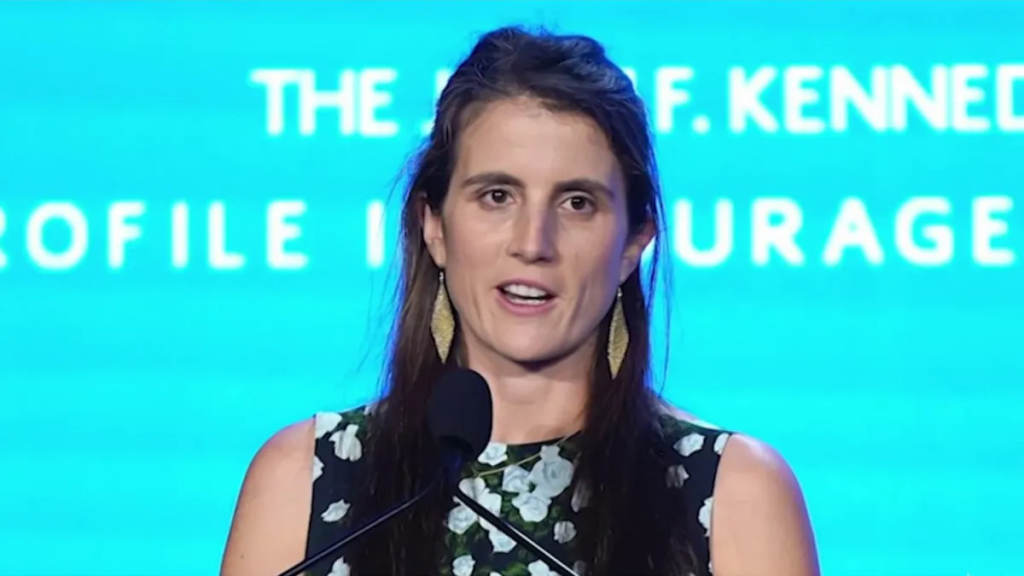
In 2017, she married physician George Moran, and they welcomed a son, Edwin (“Eddie”), in 2022. Friends and observers have said she appeared to be living the life she wanted: meaningful work aligned with deeply held values and a growing family.
A sudden diagnosis after childbirth
That life changed dramatically on May 25, 2024—the day her daughter, Josephine (“Josie”), was born. What should have been a celebratory moment became the day doctors discovered something was gravely wrong. A routine blood test after delivery revealed an abnormally high white blood cell count, and further testing led to a diagnosis of acute myeloid leukemia, reportedly with a rare mutation.
In the months that followed, Schlossberg endured extended hospitalization, rounds of chemotherapy, and a bone marrow transplant process supported by family members, including a sister who served as a donor. Her illness also imposed a heartbreaking distance between mother and children: due to infection risks following treatment, she faced periods when she could not safely care for her newborn or participate in ordinary early-childhood routines.
A final essay that turned personal into political
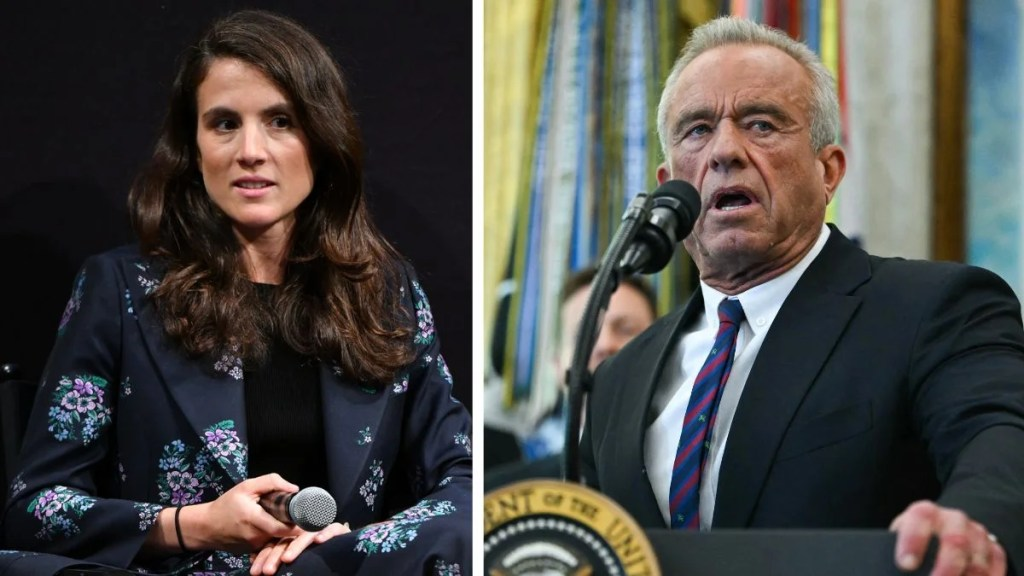
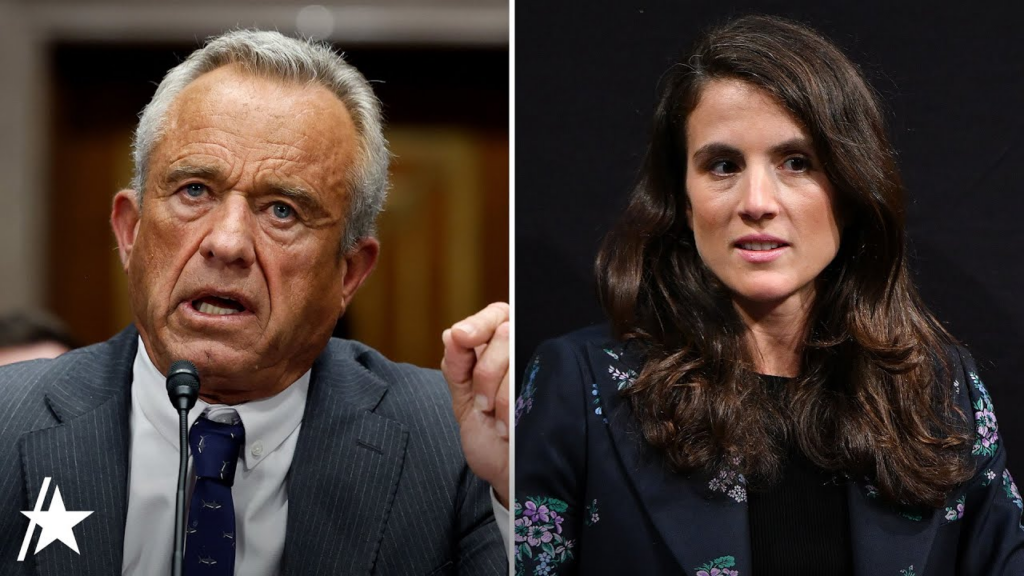
As Schlossberg fought for her life, her cousin Robert F. Kennedy Jr. remained in the national spotlight. After launching a presidential run in 2024—first within the Democratic Party and later as an independent—he ultimately suspended his campaign and endorsed Donald Trump, a decision that some members of his family publicly condemned.
Following Trump’s election victory, Kennedy Jr., known for vaccine skepticism and other controversial claims, was nominated and confirmed as Secretary of Health and Human Services, placing him at the helm of the country’s public health apparatus. For Schlossberg, whose survival depended on medical care and research, this was not merely political news—it was intensely personal.
On November 22, 2025, she published an essay in The New Yorker titled “A Battle with My Blood,” blending memoir with pointed criticism of her cousin’s public role. In the essay, she described watching Kennedy Jr.’s ascent from a hospital bed and expressed fear that policy decisions could threaten the very kinds of medical research and clinical trials that patients like her rely on.
She also recalled a postpartum medical emergency in which doctors used misoprostol to stop severe bleeding, noting that the drug is also associated with abortion protocols and could be politically contested. Her message was clear: policies debated on television can become life-or-death realities at the bedside.
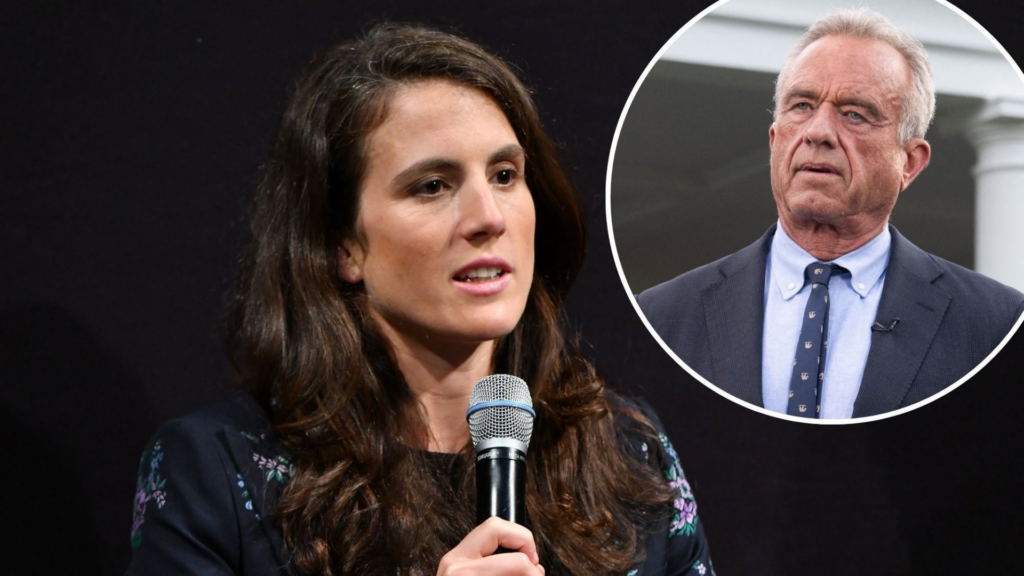
Her essay included some of her most emotionally devastating reflections on motherhood under the shadow of terminal illness, questioning what her youngest child would remember and grieving the time stolen from her family. Readers widely described the piece as unflinching and deeply human—a final public statement that combined tenderness with rage and fear.
A feud already in full view
Schlossberg’s essay did not appear in a vacuum. The Kennedy family had already been publicly split over Robert F. Kennedy Jr.’s political choices and health-related advocacy. Earlier, Caroline Kennedy had reportedly submitted a sharply critical letter to lawmakers ahead of her cousin’s confirmation process, portraying him as dangerous and accusing him of hypocrisy on vaccines, among other claims. Her son, Jack Schlossberg—Tatiana’s brother—has also attacked Kennedy Jr. publicly, framing him as unfit for office and accusing him of spreading misinformation.
These statements deepened the perception of a family rupture that was no longer private. Even attempts by Kennedy Jr. to project familial affection—such as general comments about still loving relatives who disagree—did little to quiet the conflict.
Why the funeral became a flashpoint
Against that backdrop, the report that Kennedy Jr. was excluded from Schlossberg’s funeral has been interpreted by some as an escalation from political condemnation to personal severance.
The funeral was described as private, tightly controlled, and focused on protecting Schlossberg’s young children and immediate family from additional attention. Insiders quoted in circulating accounts suggested that the decision was made to avoid controversy or unwanted media scrutiny during an already devastating time. If true, the logic is straightforward: inviting a nationally polarizing figure—particularly one recently criticized by the deceased in widely read, deeply personal writing—could shift the focus from mourning to spectacle.
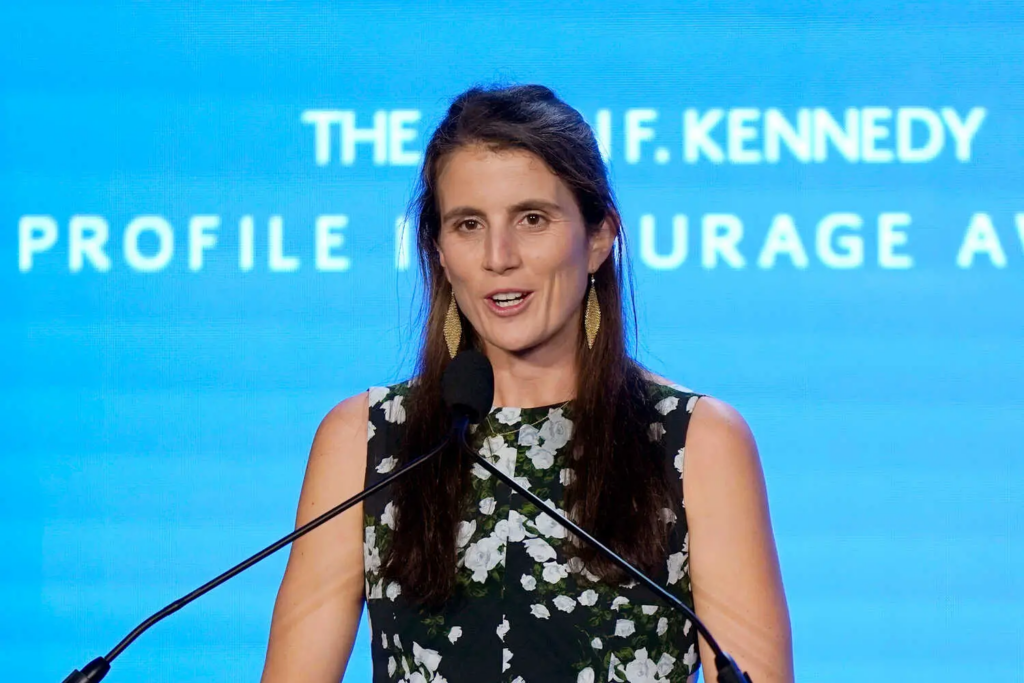
The contrast with another recent family funeral has only fueled public fascination. In October 2025, Robert F. Kennedy Jr. attended services for Joan Kennedy, the former wife of Senator Ted Kennedy, and even served as a pallbearer. The reported exclusion from Schlossberg’s funeral only months later underscores how personal the conflict had become.
A loss beyond politics
For many observers, the most important fact is not the political drama but the human loss. Tatiana Schlossberg left behind a husband, a young son, and a daughter still in infancy. Tributes that surfaced after her death emphasized her intellect, humor, and resolve, praising both her environmental work and the courage of her final writing.
Whether or not Robert F. Kennedy Jr. was formally “banned,” the story symbolizes something larger: a family once associated with unity, public service, and mythic “Camelot” imagery now openly fractured by ideology and power. In the end, Schlossberg’s legacy may not be the controversy around her funeral, but the clarity of her voice—capturing what it means to confront mortality young, to love children you may not see grow up, and to insist that public policy is never abstract when it reaches into a hospital room.