R1 The jokes stopped. The laughter faded. And for one rare moment, America’s late-night hosts put comedy aside to honor Rob Reiner after news of his tragic passing shook the entertainment world.

In a rare and somber turn for late-night television, four of the genre’s top hosts—Stephen Colbert, Jimmy Kimmel, Jimmy Fallon, and Seth Meyers—set aside their usual comedy routines this week to pay heartfelt respects to Hollywood legend Rob Reiner. The tributes came in the wake of Reiner’s shocking death on December 14, alongside his wife Michele Singer Reiner, in what authorities have ruled a double homicide at their Brentwood home.
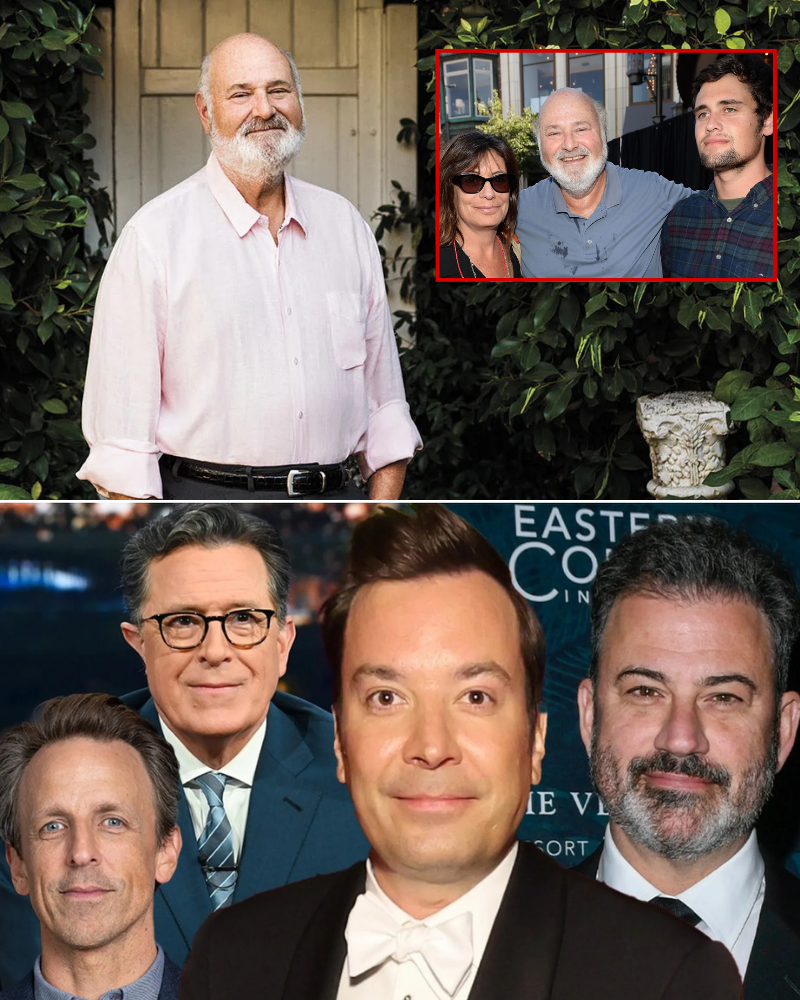
Viewers tuning in expecting the typical mix of punchlines and satire instead got raw emotion: long pauses, personal anecdotes, choked voices, and a collective sense of loss for a filmmaker whose classics like The Princess Bride, Stand By Me, When Harry Met Sally…, and This Is Spinal Tap defined generations of moviegoers.
Colbert opened his show with a brief but poignant acknowledgment, calling the events “too dark” for jokes and vowing to proceed with comedy “in light of, and in spite of, the darkness.” Kimmel delivered a passionate monologue, hailing Reiner as “one of our greatest directors and patriots” while sharing memories of his warmth. Fallon recalled Reiner’s frequent guest appearances, noting how staffers would line up just to greet him, and praised him as “one of the smartest and funniest people I’ve ever met.” Meyers offered the most personal tribute, recounting time spent with the couple and emphasizing Reiner’s ability to “get the best out of people,” both on screen and off.
The mood across the shows shifted noticeably—no band intros blasting over applause, no rapid-fire monologues easing into laughs. Instead, the hosts lingered on Reiner’s legacy: his breakout as “Meathead” on All in the Family, his directorial triumphs that blended humor, heart, and humanity, and his off-screen activism. Colbert’s words hit particularly hard when he reflected on how Reiner’s stories “don’t just entertain us—they stay with us, shaping who we are long after the screen goes dark.”
What made these moments stand out wasn’t spectacle but vulnerability. In an industry fueled by quick clips, viral outrage, and constant noise, the restraint felt profound. Pauses stretched longer than usual. Voices cracked. The tributes weren’t coordinated in advance, yet they echoed a shared reverence for a man who transcended entertainment to become woven into America’s cultural fabric.
Social media buzzed with reactions, with clips racking up millions of views. Fans called the segments “beautifully raw” and “a reminder of what late-night can be at its best.” Critics noted the contrast to the genre’s often polarizing political bent, praising the focus on pure respect amid tragedy. One viral thread read: “No jokes tonight—just real grief for a real legend. This is why we watch.”
The tributes also touched on the broader shock rippling through Hollywood. Reiner, 78, had just promoted his latest film, the Spinal Tap sequel, and remained active in causes close to his heart. His death—alongside Michele, 70—stunned the industry, with stars like Billy Crystal, Meg Ryan, and Martin Scorsese sharing memories. Authorities charged the couple’s son, Nick Reiner, 32, with murder, adding layers of heartbreak to an already devastating loss.
Some hosts wove in criticism of political responses to the tragedy, but the core remained Reiner’s enduring impact. Meyers shared a touching story from Norman Lear’s 100th birthday party, where Reiner gently prompted the TV icon to share anecdotes, showcasing his generosity. Fallon highlighted personal connections, saying everyone felt “like they had a personal connection to Rob Reiner and his work.”
Even Saturday Night Live, where Reiner hosted the third-ever episode in 1975—helping shape the show’s sketch format—paid respects with an in-memoriam card during its holiday episode.
In a fragmented media world dominated by speed and snark, these quiet, emotional nods felt almost revolutionary. They reminded audiences that some losses demand pause, reflection, and unfiltered honor. Reiner’s films taught us about friendship, love, adventure, and standing up for what’s right—and in mourning him, late-night TV honored that lesson.
The conversation hasn’t stopped online, with fans revisiting classics and sharing how Reiner’s work shaped their lives. As one viewer posted: “Tonight’s shows weren’t funny—but they were powerful. Thank you for reminding us why stories matter.”
Reiner’s influence spanned comedy, drama, and activism, leaving a void that’s hard to fill. But through these tributes, his voice echoes on—proving some legacies are too big for jokes alone.