Until recently, it was virtually unheard of for a sitting U.S. president to sue a news organization. Yet in a matter of months, President Donald Trump has turned such lawsuits into a recurring tactic.
Trump has now filed defamation suits against The Wall Street Journal, The New York Times, and most recently the BBC. All of the cases were filed in Florida and follow a similar pattern. Legal scholars interviewed by CNN widely agree that the claims are weak, suggesting that the lawsuits may be designed less to win in court and more to generate headlines and intimidate critical media.
The latest lawsuit targets the BBC over an editing error in a pre-election documentary, which Trump claims was meant to sway American voters — despite the fact that the program never aired in the United States.
Bob Corn-Revere, chief counsel at the Foundation for Individual Rights and Expression, dismissed the case outright, saying it lacks legal grounding both in defamation law and in jurisdiction. He described the lawsuit as another attempt by Trump to pressure media organizations he views as hostile to his administration.
The strategy appears consistent: Trump announces a major lawsuit, dominates news coverage, and presents himself to supporters as taking aggressive action against perceived media wrongdoing. His backers then anticipate massive financial penalties against news outlets. But once legal experts examine the filings, they frequently identify significant legal shortcomings.
Dylan McLemore, a media law scholar at the University of Oklahoma, noted that Trump’s repeated choice to file in Florida raises questions about his true intent. According to McLemore, the core issue across these cases is whether the goal is legal victory or the chilling of press freedom through spectacle.
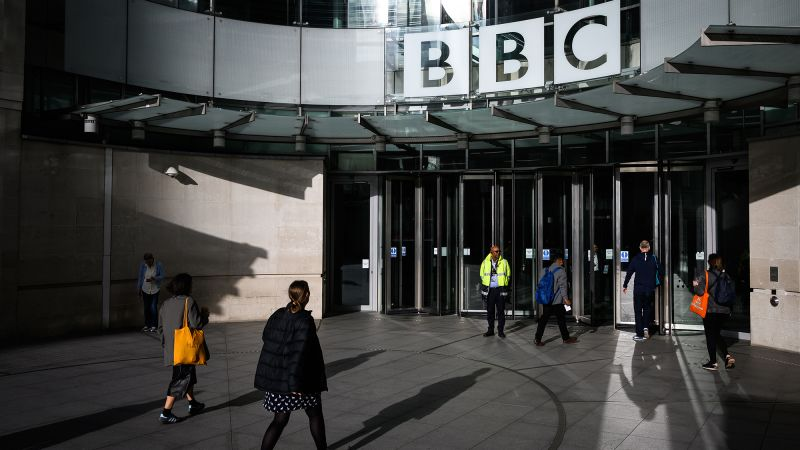
The BBC lawsuit has drawn particular skepticism, even though the broadcaster has acknowledged an editing mistake and issued an apology. However, McLemore emphasized that an apology does not equate to an admission of defamation. In fact, public apologies can reduce alleged harm and strengthen a defendant’s position in libel cases.
The dispute centers on an October 2024 episode of the BBC’s Panorama documentary series about Trump’s reelection campaign. The episode edited together separate portions of Trump’s January 6, 2021 speech, making it appear as though he directly urged supporters to march to the Capitol and “fight like hell” in one continuous statement.
In reality, Trump’s comments about “fighting” were distinct from his remarks encouraging supporters to walk to the Capitol to “cheer on” lawmakers. Critics argue the BBC should have clearly signaled the edit, perhaps using visual cues commonly employed in documentary filmmaking.
The edit initially went unnoticed when the documentary aired. It gained attention months later after a leaked memo from a former BBC adviser detailed editorial concerns, which was then reported by a British newspaper.
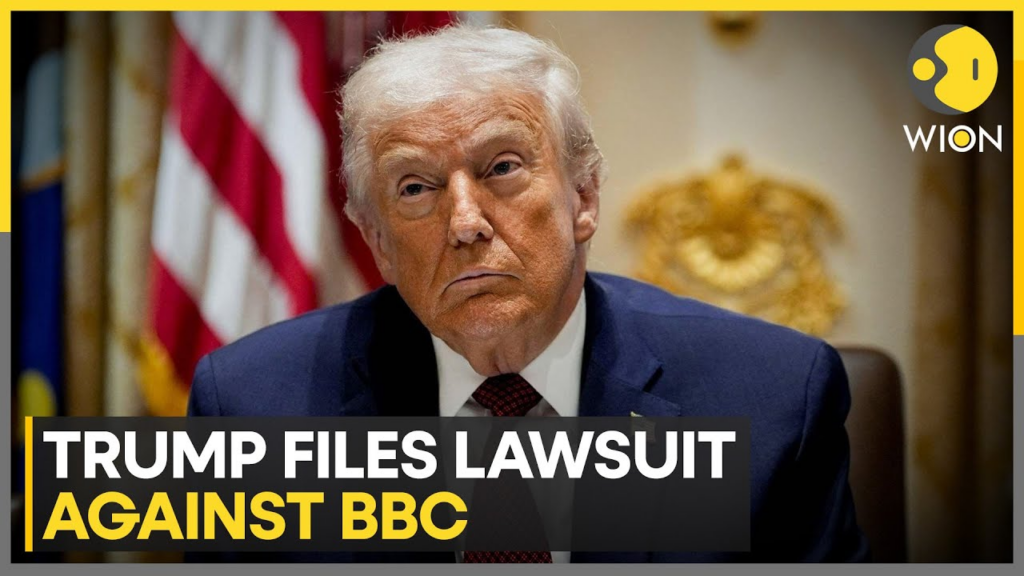
Trump and his allies have since seized on the error to challenge narratives about his role in inciting the January 6 attack. However, London-based media lawyer Mark Stephens pointed out that multiple U.S. judges have already cited Trump’s rhetoric — including repeated calls to “fight” and claims of a stolen election — as central factors in the violence.
Stephens noted that when those statements are combined with Trump’s encouragement for supporters to move toward the Capitol, even if framed as peaceful, they could reasonably be interpreted as incitement. That interpretation, he said, is essentially what the BBC conveyed — and one already echoed in numerous U.S. court rulings.
The BBC stated on Tuesday that it intends to vigorously defend itself. PEN America condemned the lawsuit, calling it an effort to extend Trump’s pressure campaign against the press beyond U.S. borders and discourage international reporting.
University of Utah law professor RonNell Andersen Jones underscored how protective U.S. defamation law is toward news organizations, particularly in cases involving public figures. While she acknowledged that the BBC’s editing fell below journalistic standards — a point the broadcaster itself has conceded — she stressed that poor journalism alone is not enough to prove defamation.
To prevail, Trump must demonstrate that the BBC acted with actual malice — meaning it knowingly published false information or acted with reckless disregard for the truth. Legal experts agree that meeting this standard in cases involving news editing is extremely difficult.
Jurisdiction is expected to be a major battleground. According to the BBC, the documentary was neither broadcast nor streamed in the U.S. Trump’s complaint speculates that some Florida residents may have accessed it using VPNs, but provides no concrete evidence.
Whether Florida viewers were actually affected will be a key issue, Andersen Jones said, and could lead the court to dismiss the case early. The choice of venue is also significant given Trump’s demand for $10 billion in damages — a figure experts describe as nearly impossible to justify without proof of a substantial audience and measurable harm.
Despite Trump’s apparent enthusiasm for high-profile legal battles with major news outlets, past cases suggest that when defendants choose to fight rather than settle, courts often rule in favor of the First Amendment.
The International Press Institute described the BBC lawsuit as grossly disproportionate and consistent with Trump’s broader campaign against critical media organizations worldwide. Its executive director, Scott Griffen, warned that the lawsuit appears intended to send a message to journalists everywhere.