Intelligence reports suggest that Russia might be developing a new anti-satellite weapon designed to disrupt Elon Musk’s Starlink network using destructive space debris. This weapon could flood Starlink’s orbital path with thousands of high-density pellets, potentially disabling multiple satellites at once. However, such a weapon would also pose significant risks to other satellites in orbit, including those belonging to Russia and China, who rely on them for communications and defense.
While the weapon concept has raised concerns, some experts remain skeptical about its feasibility. Analysts question whether the weapon could effectively target only Starlink satellites without causing widespread chaos in space. The unintended consequences of using such a system could make it more trouble than it’s worth for Russia, especially given that any debris created would be a hazard to all satellites, including those of Russia’s allies.
“I find it hard to believe. Honestly, I really don’t think it would work,” said Victoria Samson, a space security expert at the Secure World Foundation. “It sounds like a very problematic idea.”
However, Brigadier General Christopher Horner, head of Canada’s military space division, acknowledged that while it might sound extreme, such a system can’t be completely ruled out. Russia’s history of pursuing bold space-based military technology, including alleged nuclear weapons in space, could make a weapon like this plausible.
Russia has long viewed Starlink, which has played a key role in supporting Ukraine’s defense during the ongoing conflict with Russia, as a significant threat. Starlink has been critical in providing communication services, targeting guidance, and other forms of support for Ukrainian forces. In response, Russia has previously indicated that commercial satellites aiding Ukraine could be legitimate military targets.
Recent intelligence suggests that Russia may be developing a system that could attack Starlink’s satellites by releasing clouds of tiny pellets in space. These pellets, possibly launched by a network of smaller satellites, would be able to destroy multiple satellites in one strike. However, experts warn that this approach could trigger uncontrollable chaos in low Earth orbit.
Horner raised concerns that if the pellets were to scatter uncontrollably, the resulting debris could take out not just Starlink satellites, but any satellite within the same orbital range. “It would be like releasing a bunch of BBs into space,” he said. “It could affect everything in that orbital zone, not just Starlink.”
Though the intelligence suggests that Russia is actively working on this project, there is no clear timeline for its deployment. Some experts, like Samson, believe that the weapon may be a theoretical or experimental concept, possibly pushed by certain factions within the Russian space community to attract funding.
“There might be some scientists working on this as a theoretical project,” Samson said. “They might see it as an interesting idea that could eventually receive government backing.”
Moreover, the idea of such a weapon could also be part of a broader strategic move to provoke an international response. By raising concerns about an advanced Russian anti-satellite system, it could prompt Western countries to invest in countermeasures, or serve as a form of deterrence.
The intelligence reports also reveal that these pellets would be so small that they might not be detected by current satellite-tracking systems. This could make it difficult to attribute attacks to Russia, since the pellets could evade detection and identification. However, experts suggest that if multiple satellites were to fail in a similar manner, it wouldn’t take long for observers to figure out what had happened.
Even small debris can have devastating consequences. For instance, a small piece of debris recently caused damage to a Chinese spacecraft. Experts believe that Starlink satellites, with their delicate solar panels, would be particularly vulnerable to such attacks.

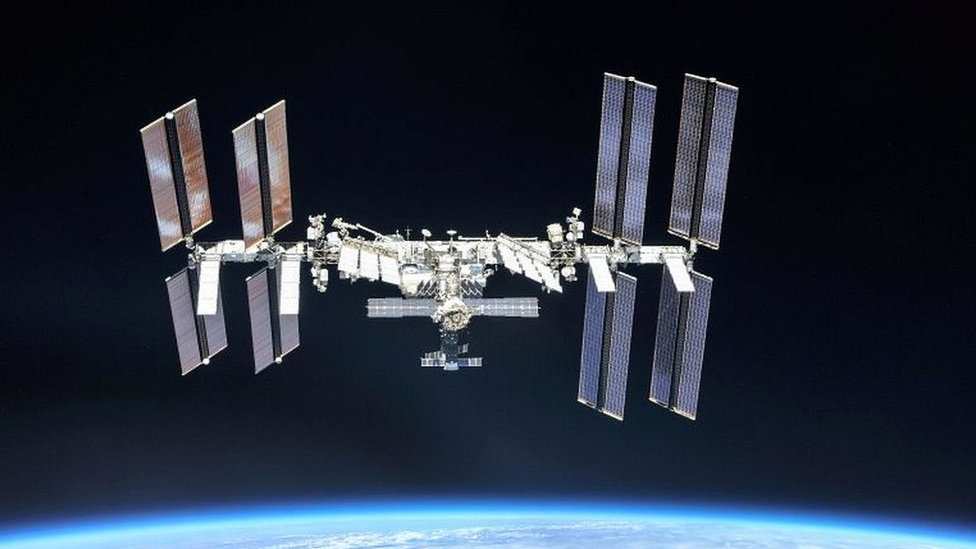
After an attack, the pellets and debris would eventually fall back to Earth, posing risks to other satellites in lower orbits, like China’s Tiangong space station and the International Space Station. This debris could continue to pose a long-term threat to other orbital systems, potentially spreading chaos throughout space.
Some analysts argue that Russia may not be serious about deploying such a system, given the potential risks involved. They may simply be using the idea of an anti-satellite weapon to intimidate adversaries without actually intending to carry it out.
“This could just be a form of psychological warfare,” said Clayton Swope, a space security expert at the Center for Strategic and International Studies. “Russia might be looking to create fear or uncertainty rather than actually deploying this weapon.”
Samson agreed, suggesting that the major risks of such a weapon, including the threat to Russia’s own space infrastructure, could make the idea impractical for the country. “They’ve invested too much in becoming a space power to risk losing it all with something like this,” she said.
Ultimately, the future of this potential weapon remains uncertain. While it may not be imminent, its development raises significant concerns about the future of space security and the potential for new forms of conflict in Earth’s orbital environment.