RM The Battle Between Altman and Musk in the AI Industry: From Co-Founders to Fierce Rivals


When they first set out, their mission was clear: no pursuit of profit, no allegiance to any tech giants, and no concentration of AI power in the hands of a small elite. Elon Musk, Sam Altman, and other influential figures like Peter Thiel and Reid Hoffman committed a whopping $1 billion to support this vision.
Yet, just a decade later, the two co-founders find themselves at opposite ends of the battlefield. OpenAI has now evolved into the fastest-growing commercial company in the world, valued at over half a trillion dollars and at the center of the global AI race. Meanwhile, Musk—who once vehemently opposed the commercialization of AI—has launched his own AI startup, xAI, which has quickly become a formidable competitor with its own vision for leading the next AI era.
This paradox perfectly encapsulates the tumultuous changes in the AI sector: what began as a movement to “humanize technology” has transformed into one of the fastest-growing, most financially backed markets in history.
OpenAI’s 10-Year Journey: From Idealism to Rivalry

OpenAI started as a small research group working modestly from an office in San Francisco. But by the end of 2022, the release of ChatGPT marked a turning point. In a matter of weeks, the chatbot shattered user records, becoming the fastest-growing product in internet history.
The market exploded, investors flocked to the company, and OpenAI became the epicenter of the AI revolution. Its private valuation surged to $100 billion, then soared to over $500 billion within two years. With over 800 million users accessing ChatGPT every week, OpenAI surpassed even its own expectations.
But at this critical moment, tensions that had been simmering for years between Musk and OpenAI resurfaced. Musk had stepped down from OpenAI’s board in 2018, citing a desire to avoid conflicts of interest with Tesla, which was expanding into AI. However, internal communications suggest that the split was far from amicable.
In 2017, Musk had sent an email to OpenAI’s co-founders expressing dissatisfaction with the organization’s increasing resemblance to a tech company rather than a nonprofit. He warned that he would stop funding if OpenAI strayed from its original mission. Altman reassured him that they still believed in the nonprofit model, but OpenAI’s growing ties with Microsoft indicated that the organization’s trajectory had already been decided.
The conflict reached a boiling point in early 2024 when Musk sued OpenAI and Altman. He accused them of “betraying the mission for humanity,” becoming overly dependent on Microsoft, and fully embracing the path of commercialization. Musk even offered to buy OpenAI for nearly $100 billion. In response, OpenAI completed a restructuring, ensuring that its original nonprofit entity retained control over the commercial arm, which became the OpenAI Group PBC.
The AI Battlefield
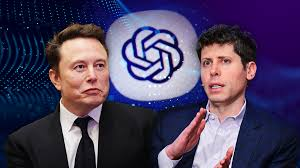
While OpenAI became the centerpiece of the global AI industry, Musk forged his own path with xAI. Within just a year, xAI was on track to achieve a $230 billion valuation, fueled by investments and Musk’s “uncensored AI” strategy. Its product, Grok, became a direct competitor to ChatGPT, marking the rivalry as not just a technological battle but also a media, legal, and ideological war over the future of AI.
Alongside the Altman-Musk showdown, internal fractures at OpenAI led to the emergence of a third contender: Anthropic. Two key figures from OpenAI’s leadership, Dario and Daniela Amodei, left the company to found this new startup, bringing with them a more cautious approach and differing philosophies on AI safety. In just a few years, Anthropic attracted investments from Amazon, Google, Microsoft, and Nvidia, reaching a valuation of $350 billion. Its product, Claude, became one of the most serious competitors to GPT, creating a rare three-way competition in the tech industry.
The Price of Progress
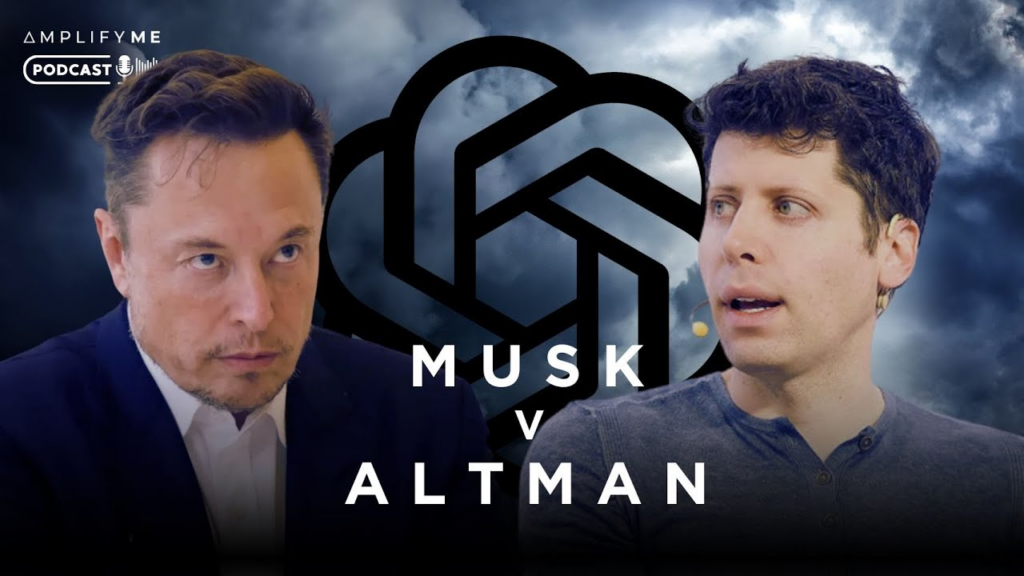
The AI race is not only incredibly expensive but also unprecedented in its scale. OpenAI announced plans to invest over $1.4 trillion in infrastructure, including colossal data centers and custom chips. This investment far outstrips any tech project undertaken by Amazon, Google, or Meta in the past decade combined. In contrast, Anthropic, with its more conservative approach, has pledged around $100 billion in the coming years, while Musk’s xAI accelerates its growth with strong financial backing from the market.
The pressure from the market continues to weigh heavily on Altman. After Google launched Gemini 3—a new AI model widely praised for its rapid advancements—OpenAI entered “red alert” mode, dedicating all its resources to enhance the speed and stability of ChatGPT. This included delaying projects related to advertising, healthcare, and personal assistants. By December, OpenAI released ChatGPT-5.2 and secured a $1 billion, three-year deal with Disney to accelerate AI-generated video content via Sora. Altman claimed that Gemini’s impact was less significant than initially feared, expressing confidence that the company would soon emerge from its crisis.
The Irony of the AI Revolution
A decade later, what stands out is not just the rise of an industry worth trillions of dollars but the profound transformation of those who helped build it. Sam Altman, who once staunchly advocated for a nonprofit model, is now the head of the world’s most powerful commercial AI company. Elon Musk, who once warned about the dangers of AI commercialization, now leads one of the fastest-growing AI empires. Meanwhile, the original OpenAI co-founders and key personnel have split off to form new ventures, each valued at hundreds of billions of dollars.
Ten years ago, they came together to create a project that would prevent AI from falling into the hands of large corporations. A decade later, they are fiercely competing within the very market they once sought to avoid. This, perhaps, is the most ironic paradox in the history of modern technology.