Vatican City, January 1, 2026 — In a renewed affirmation of Catholic doctrine, the Vatican has once again declared that marriage is to be understood exclusively as a lifelong covenant between one man and one woman, excluding all other forms of union.
This position is articulated in a doctrinal document titled Una Caro (*One Flesh): In Praise of Monogamy – A Doctrinal Note on Marriage as Exclusive Union and Mutual Self-Giving. The text was approved by Pope Leo XIV on November 21, 2025, and officially released on November 25. Rather than presenting monogamy as a limitation, the document frames it as a profound expression of human dignity, reciprocal belonging, and God’s faithful love.
The statement emerges in a cultural climate marked by shifting attitudes toward relationships, including growing acceptance of polygamy in certain regions and polyamory in Western societies. Against this backdrop, the Vatican firmly rejects all non-monogamous arrangements—such as polygamy, polyandry, and same-sex unions—while affirming the unique beauty of a committed, exclusive bond between a man and a woman.
Biblical and Historical Roots
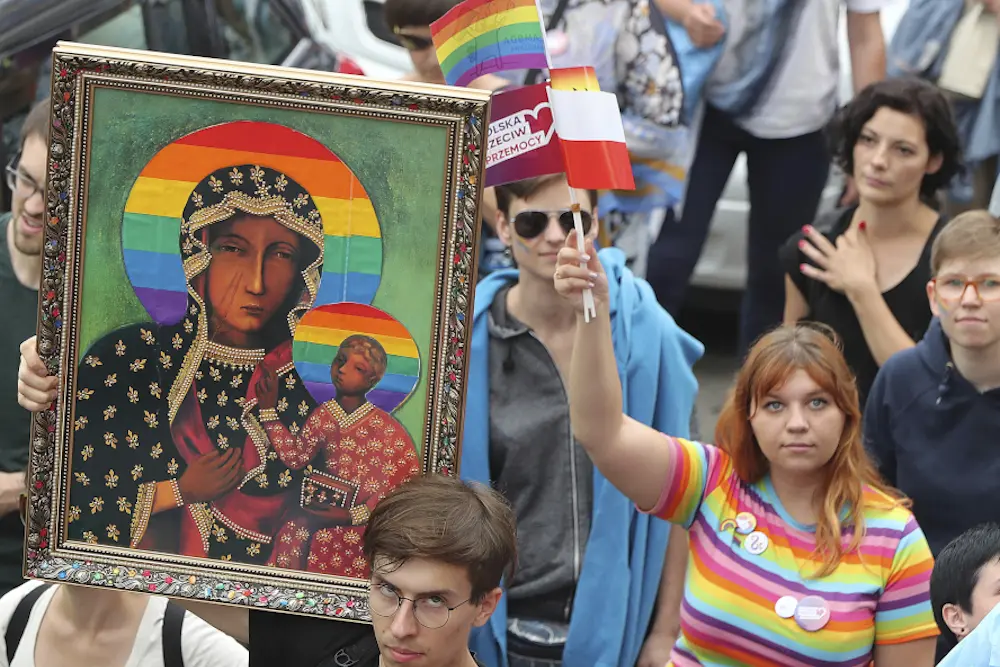
The document grounds its teaching in Sacred Scripture, beginning with the Book of Genesis. The creation narrative, in which Eve is fashioned as a fitting companion for Adam, culminates in the declaration that a man leaves his parents to unite with his wife, and the two become “one flesh” (Genesis 2:24). This, the text explains, reveals God’s original design for marriage as a monogamous union.
While the Old Testament records instances of polygamy among figures such as Abraham and David, the document observes that these relationships often resulted in jealousy, division, and suffering. In contrast, biblical poetry and wisdom literature—particularly the Song of Songs—celebrate faithful and exclusive love.
In the Gospels, Jesus restores marriage to its original meaning by pointing back to “the beginning.” He rejects divorce as contrary to God’s will and reaffirms the indissoluble bond between one man and one woman (Matthew 19:4–6). Saint Paul deepens this understanding by describing marriage as an image of Christ’s enduring union with the Church (Ephesians 5).
Early Christian thinkers, including Saint Augustine and Saint John Chrysostom, are also cited. They upheld monogamy as essential to genuine communion and fidelity, arguing that it orders human desire toward authentic love rather than fragmentation.
Papal Teaching and Contemporary Questions
Drawing on longstanding magisterial teaching, Una Caro references Pope Leo XIII’s 1880 encyclical Arcanum Divinae, which defended monogamy as a safeguard of women’s dignity and equality. The document also recalls Humanae Vitae by Paul VI and Saint John Paul II’s Theology of the Body, both of which emphasized the inseparable unitive and procreative meanings of marital love—fully realized, the Church maintains, only within a monogamous heterosexual marriage.
Pope Leo XIV’s approval of the text is consistent with his previous affirmations of marriage as a “total, faithful, and fruitful love between a man and a woman.” The document responds in part to concerns raised by bishops in Africa, where polygamy remains culturally ingrained in some communities. Rather than relying solely on prohibition, the note encourages evangelization that presents monogamy positively, highlighting its human and spiritual richness.
In addressing Western trends, the document critiques polyamory as a contemporary illusion that promises fulfillment but ultimately disperses love across “a succession of faces,” weakening commitment and fostering isolation. True love, it argues, deepens through exclusivity and mirrors God’s unwavering covenant with humanity.
Although same-sex unions are not the primary focus of the text, the consistent definition of marriage as a union between a man and a woman clearly reaffirms the Church’s long-standing position that such relationships cannot constitute marriage, as they lack the sexual complementarity required for becoming “one flesh.”
The Splendor of Exclusive Love
Rather than portraying monogamy as restrictive, Una Caro presents it as a “promise of infinity.” Drawing from philosophy, anthropology, and poetry—including works by Pablo Neruda and Eugenio Montale—the document reflects on how exclusive commitment allows a genuine “we” to emerge between spouses.
Monogamy, the text explains, protects vulnerability and nurtures tenderness. Spouses are called to mutual care, openness to life, and service to others, particularly the poor—an emphasis that echoes Pope Leo XIV’s exhortation Dilexi Te. Even marriages without children retain their full dignity, as fruitfulness can also take spiritual and charitable forms.
The document strongly condemns all forms of abuse within relationships and calls for a renewed educational approach to help young people rediscover the value of lasting commitment in a culture that often prioritizes immediacy and disposability.
Relevance for Today’s World
Released amid intense global debate about the meaning of marriage, Una Caro speaks to societies marked by high divorce rates, normalized infidelity, and growing experimentation with alternative relationship models. While critics may see the document as out of step with modern trends, the Vatican presents it as a defense of authentic human flourishing rooted in fidelity.
For Catholics, the note reinforces the importance of serious marriage preparation and sustained pastoral support for couples facing difficulties. Priests and educators are encouraged to present monogamy not as a mere rule, but as a grace-filled vocation.
In a fragmented age, the Vatican’s message remains unambiguous: Christian marriage—understood as the exclusive union of one man and one woman—continues to stand as a sign of hope, equality, and enduring love that reflects God’s own faithfulness.