RT “FROM SCI-FI TO REALITY?” — ELON MUSK SAYS SPACEX WANTS TO MAKE STAR TREK REAL, AND THE IMPLICATIONS ARE STAGGERING

For decades, Star Trek has stood as a symbol of humanity’s most optimistic dreams: faster-than-light travel, interplanetary cooperation, and a future where technology expands not only our reach, but our values. What once felt like pure science fiction is now inching closer to reality—at least in spirit—thanks to the ambitions of Elon Musk and SpaceX.
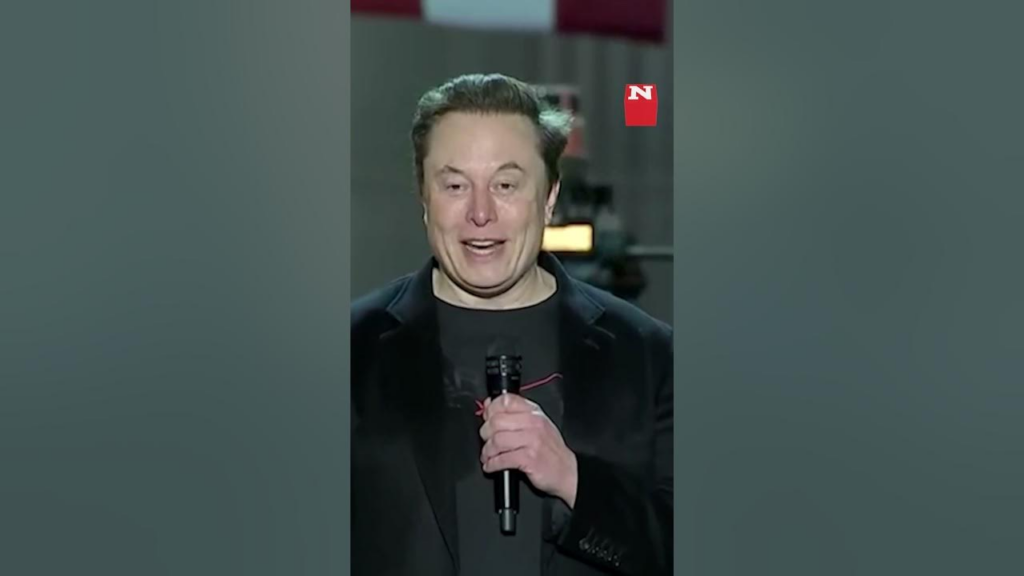
Musk has repeatedly stated that SpaceX’s ultimate goal is to make humanity a multiplanetary species. In doing so, he often invokes language that sounds strikingly familiar to science-fiction fans. Reusable rockets, massive starships capable of carrying hundreds of people, self-sustaining colonies on other worlds—these are not far removed from the futuristic visions popularized by Star Trek. The difference is that SpaceX is not writing scripts. It is building hardware.
Turning Fiction into Engineering
At the center of this vision is Starship, SpaceX’s fully reusable, super-heavy spacecraft. Designed to transport humans and cargo to the Moon, Mars, and beyond, Starship represents a radical departure from traditional spaceflight. Its size, capacity, and reusability suggest a future where space travel is no longer a rare, government-led endeavor, but a scalable and repeatable process.
In Star Trek, starships are not experimental prototypes—they are workhorses of exploration. SpaceX appears to be chasing a similar paradigm shift: making spaceflight routine, reliable, and eventually accessible to far more people than the elite few who have gone before.
The Bigger Implications
If SpaceX succeeds, the consequences will extend far beyond rockets and launchpads.
1. A New Era of Human Civilization
A self-sustaining city on Mars would be one of the most significant milestones in human history. It would mark the first time our species lives permanently on another planet—an insurance policy against extinction and a profound expansion of what it means to be human.
2. Economic and Technological Transformation
Just as the space race of the 20th century accelerated computing, materials science, and telecommunications, a new era of deep-space exploration could trigger innovations we cannot yet predict. Technologies developed for survival on Mars—energy systems, recycling, automation—could transform life on Earth.
3. Philosophical and Ethical Questions
Star Trek was never just about technology; it was about ethics, cooperation, and responsibility. As private companies like SpaceX take the lead in space exploration, critical questions arise: Who governs space? Who owns other planets? And how do we ensure that humanity’s expansion into the cosmos reflects our best values, not our worst instincts?
Reality Is Still Harder Than Fiction
Despite the excitement, it is important to remain grounded. Interplanetary travel is brutally difficult. Radiation, long-duration spaceflight, life-support systems, and human psychology in extreme isolation remain unsolved challenges. Unlike Star Trek, there are no warp drives, no artificial gravity, and no quick fixes written into a script.
Yet progress does not require perfection—it requires persistence.
A Future Once Imagined
Elon Musk’s vision does not promise a future identical to Star Trek. There will be no Starfleet uniforms or warp-speed voyages anytime soon. But the deeper idea—the belief that humanity is meant to explore, to push boundaries, and to look upward with hope—is very much alive.
Science fiction has always served as a compass pointing toward possible futures. With SpaceX, that compass may finally be aligning with reality. And if even part of that vision comes true, the future of humanity could be more extraordinary than fiction ever dared to imagine.
Elon Musk Says SpaceX’s Goal Is To Make ‘Star Trek’ Real