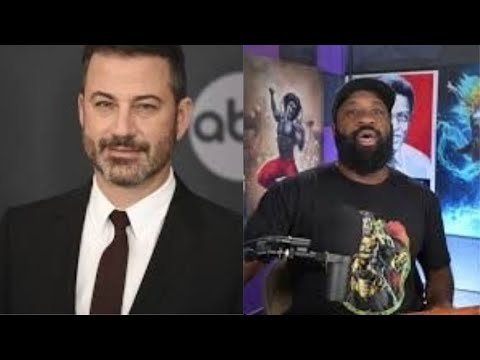
A familiar culture-war fault line has cracked open again in American media, this time linking late-night television, online outrage, and the increasingly fragile economics of “anti-woke” entertainment. At the center of the storm is Jimmy Kimmel, whose recent comments ignited a heated debate over free speech, and the Rippaverse, a crowdfunded comic-book universe that critics say is now struggling to survive financially.
What began as a throwaway joke on late-night television quickly morphed into a referendum on who really controls speech in today’s media ecosystem—and whether alternative, audience-funded projects can actually deliver on their promises of independence.
The Kimmel Flashpoint
Jimmy Kimmel has long occupied an unusual space in American comedy. Once known for crude, apolitical humor, he has in recent years embraced a more openly political tone. That shift has made him a lightning rod for critics who accuse him of punching down, silencing dissent, or hiding behind corporate power while mocking those outside the mainstream.
The latest controversy erupted after Kimmel mocked conservative or “anti-woke” media figures who complain about censorship while simultaneously building profitable platforms of their own. Supporters of Kimmel argue that satire is not censorship and that being criticized—or laughed at—does not constitute a violation of free speech.
His detractors see it differently. They claim Kimmel’s influence, amplified by a major network and corporate advertisers, contributes to a culture where certain viewpoints are marginalized, demonetized, or driven off mainstream platforms. To them, this isn’t just comedy—it’s power.
The phrase “not free speech?” quickly began trending in online spaces, less as a genuine question than as a rallying cry. If comedians on network television can ridicule dissenting voices with impunity, critics ask, how free is the marketplace of ideas really?
Enter the Rippaverse
The Rippaverse was supposed to be the answer to that question.
Launched as a crowdfunded comic-book universe positioned explicitly against “woke” politics in mainstream comics, the Rippaverse promised creative freedom, direct fan support, and financial independence from Hollywood and corporate publishers. Early campaigns were undeniably successful, pulling in millions of dollars and generating enormous buzz across YouTube and social media.
For many supporters, the Rippaverse was proof that audiences hungry for alternative viewpoints could bypass traditional gatekeepers entirely. Buy directly. Fund directly. Speak freely.
But the honeymoon appears to be over.
Recent reports, leaks, and public metrics suggest that the Rippaverse is bleeding cash. Sales have slowed, production costs have risen, and enthusiasm among once-fervent supporters appears to be cooling. Critics point to delayed releases, internal disputes, and an overreliance on outrage-driven marketing as signs of a project struggling to mature into a sustainable business.
The irony has not been lost on observers: a movement built on rejecting “corporate media” now faces the same brutal economics that govern any entertainment venture. Passion alone doesn’t pay artists, printers, or distributors.
Free Speech vs. Market Reality
The collision between the Kimmel debate and the Rippaverse’s financial troubles reveals a deeper truth about free speech in modern media: speech may be free, but attention is not.
No one has stopped the Rippaverse from publishing comics. No government agency has banned its content. Likewise, Jimmy Kimmel has not been legally restrained from mocking anyone he chooses. The conflict isn’t about formal censorship—it’s about visibility, reach, and sustainability.
Late-night television still commands millions of viewers and institutional credibility. Crowdfunded projects rely on constant engagement, trust, and novelty. When outrage fades or audiences move on, the money dries up. That’s not censorship; it’s the market.
Yet markets are shaped by power. Algorithms, advertisers, platforms, and cultural norms all influence which voices thrive and which struggle. Critics of Kimmel aren’t entirely wrong to point out that corporate media enjoys advantages unavailable to independent creators. But the Rippaverse’s problems also suggest that independence comes with its own unforgiving constraints.
A Culture War with No Winners
What makes this moment revealing is how quickly both sides retreat into absolutism. One camp insists that mockery equals suppression. The other dismisses all complaints as bad-faith whining from creators who failed to deliver.
The truth is less satisfying. Free speech in America remains legally robust, but culturally contested. Alternative media can flourish, but only if it offers more than grievance and identity. And mainstream figures like Kimmel may be comedians, but they are also participants in a power structure that shapes public discourse.
As the Rippaverse struggles and the “not free speech?” debate rages on, one thing is clear: shouting about censorship is easier than building something lasting. In the end, audiences—not comedians, not influencers, not crowdfunding campaigns—decide what survives.
And lately, they seem less interested in culture wars than in content that actually delivers.