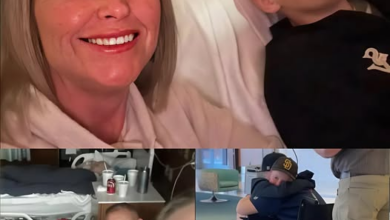
Son.“FROM EMERGENCY JOINT PAIN TO A SHOCKING DISCOVER”: A HEALTHY BOY SUDDENLY DIAGNOSED WITH A RARE BONE TUMOR — AN UNPRECEDENTED SURGERY, PARTIAL PELVIC AND FEMORAL REPLACEMENT, UNPREDICTABLE COMPLICATIONS, AND A TEARFUL JOURNEY TO LEARN TO WALK AGAIN.

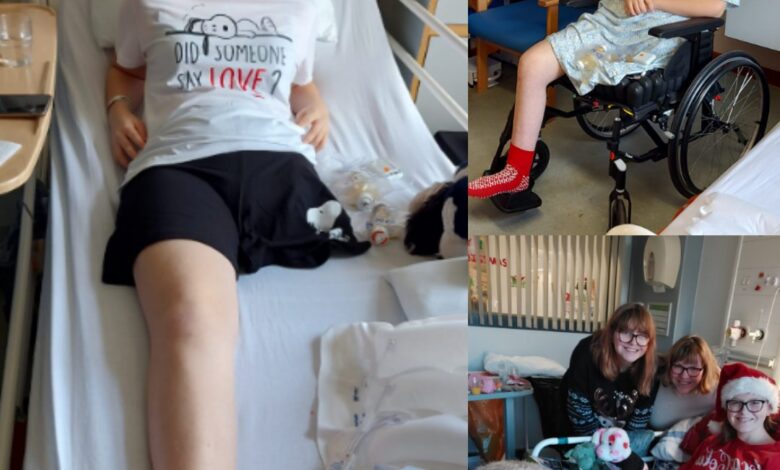
Harris seemed like a perfectly healthy little boy, with no symptoms other than an uneven posture—his right hip was slightly higher than his left. His mother, Hayley, noticed the irregularity and initially took him to a chiropractor. The chiropractor refused to treat him and insisted on an x-ray, which led them to the walk-in x-ray centre at John Radcliffe Hospital in Oxford. Despite arriving just before closing time, Hayley managed to get the scan done. The results initially appeared normal, and the family continued their day, reassured.
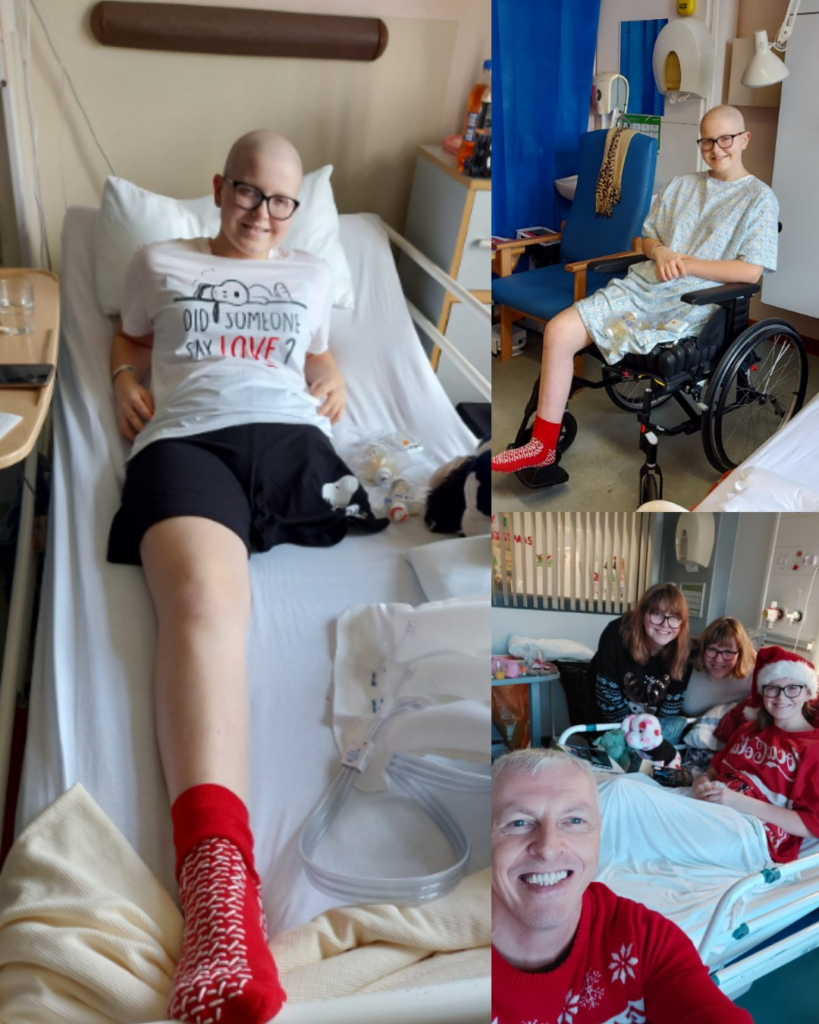
The following morning, however, Hayley received multiple calls from the hospital. When she returned the call, she was told Harris needed to come back immediately. A consultation with their GP confirmed the shocking news: Harris had a bone tumour. The family drove frantically from Portsmouth to Oxford, where Harris was taken to meet a play specialist while Hayley and her ex-husband met the doctors. The tumour was located at the top of his thigh bone (proximal femur), and a biopsy was scheduled to confirm the diagnosis.
Two weeks later, Harris underwent an open biopsy. A large incision was made in his hip to take a sample, and he spent two to three days in hospital afterward, leaving on crutches. About two weeks later, they received the diagnosis: grade one chondrosarcoma. The family faced a choice: monitor the tumour or undergo complex surgery to remove it and reconstruct his leg. They chose surgery.

At the pre-operative appointment, the surgeons explained the ambitious plan: remove part of Harris’ pelvis and thigh bone and replace it with bone from his lower right leg (fibula), held in place with metal plates and pins. Harris would be the only patient in the UK to undergo this procedure.
The 16-hour surgery was followed by a medically induced coma for four hours. Hayley was finally able to see him after 20 hours. Harris spent a week in intensive care, followed by three weeks on a general ward before returning home. He wore a cast on his lower right leg and a full-body brace to stabilise his hip. The brace had to remain on 24 hours a day for four to five months, and could only be removed briefly for washing, with Harris remaining completely still during this time.
Recovery was arduous. Doctors warned that Harris might never walk again or play sports. His family had to adjust their home, moving his bed downstairs and assisting him with all daily activities. Complications arose quickly: the transplanted bone snapped just a month after surgery, requiring two more weeks in hospital for traction. Additional corrections were needed to fix outward rotation caused by the brace.
In April 2023, Harris underwent further surgery to break and rotate the bone and replace the main pin. His left leg now grows faster than his operated right leg, resulting in a three-centimetre discrepancy. Options include taking bone from the left leg, using hormones to slow growth, or lengthening the right leg with pins and an external frame. For now, Harris wears corrective wedges in his shoes.

Despite these ongoing challenges, Harris has made remarkable progress. He has relearned to walk, though with a slight limp. Adaptations allow him to participate in physical education at school, though he still uses crutches outside the home. He swims twice a week to strengthen his right leg and attends follow-ups every three months, gradually transitioning to longer intervals as recovery continues.
Recently, a new tumour appeared in Harris’ knee on the same leg. Surgery confirmed it was non-cancerous, but he must undergo monitoring every three months due to the risk of malignancy. His reconstructed hip is slowly collapsing, and a full hip replacement will be required in the future.
Through all of this, Harris has demonstrated exceptional resilience. He has navigated multiple surgeries, long hospital stays, rehabilitation, and ongoing medical uncertainty. His mother emphasizes that, while the journey has been daunting, Harris’ determination and progress are a testament to his courage, the expertise of his medical team, and the unwavering support of his family.
Her message to other parents is simple but powerful: take each day as it comes, advocate for your child, and ensure early detection. Awareness is crucial—early diagnosis can reduce the risk of cancer spreading and increase the chances of successful treatment. Harris’ story shows that even with complex and rare conditions, children can recover, adapt, and regain strength with the right support.

Harris’ journey is ongoing, with future surgeries and continued monitoring, but he has already defied expectations. Despite being told he might never walk or play sports again, he has regained mobility, participates in school activities, and shows extraordinary courage. His story highlights the importance of resilience, adaptation, and the role of family and medical teams in supporting a child through a rare and challenging bone cancer diagnosis.