TL.Examining the Fabricated Social Media Story About Oprah Winfrey & Robert F. Kennedy Jr.

In the fast-moving currents of social media, a compelling story has recently gained significant traction, depicting a dramatic and tense exchange between media mogul Oprah Winfrey and political figure Robert F. Kennedy Jr. The narrative, shared thousands of times across various platforms, paints a vivid picture of a television interview where Kennedy masterfully defends his faith against what is portrayed as a condescending challenge from the host, leaving her utterly “speechless.” However, a thorough investigation into the public record and media archives reveals a crucial fact: the widely circulated event never happened.
The story is a work of fiction, an example of digital content crafted to elicit a strong emotional response and go viral. Yet, its details are specific, which lends it an air of credibility for many readers. According to the viral posts, Winfrey initiated the confrontation during a broadcast interview, supposedly looking at Kennedy with a smirk and asking if his faith was merely a political tool. The narrative claims she asked, “I notice that you have been quite open about your faith lately. Many of your critics say that you are using your faith to win over voters. Is that true? Is your faith just a political tool?”
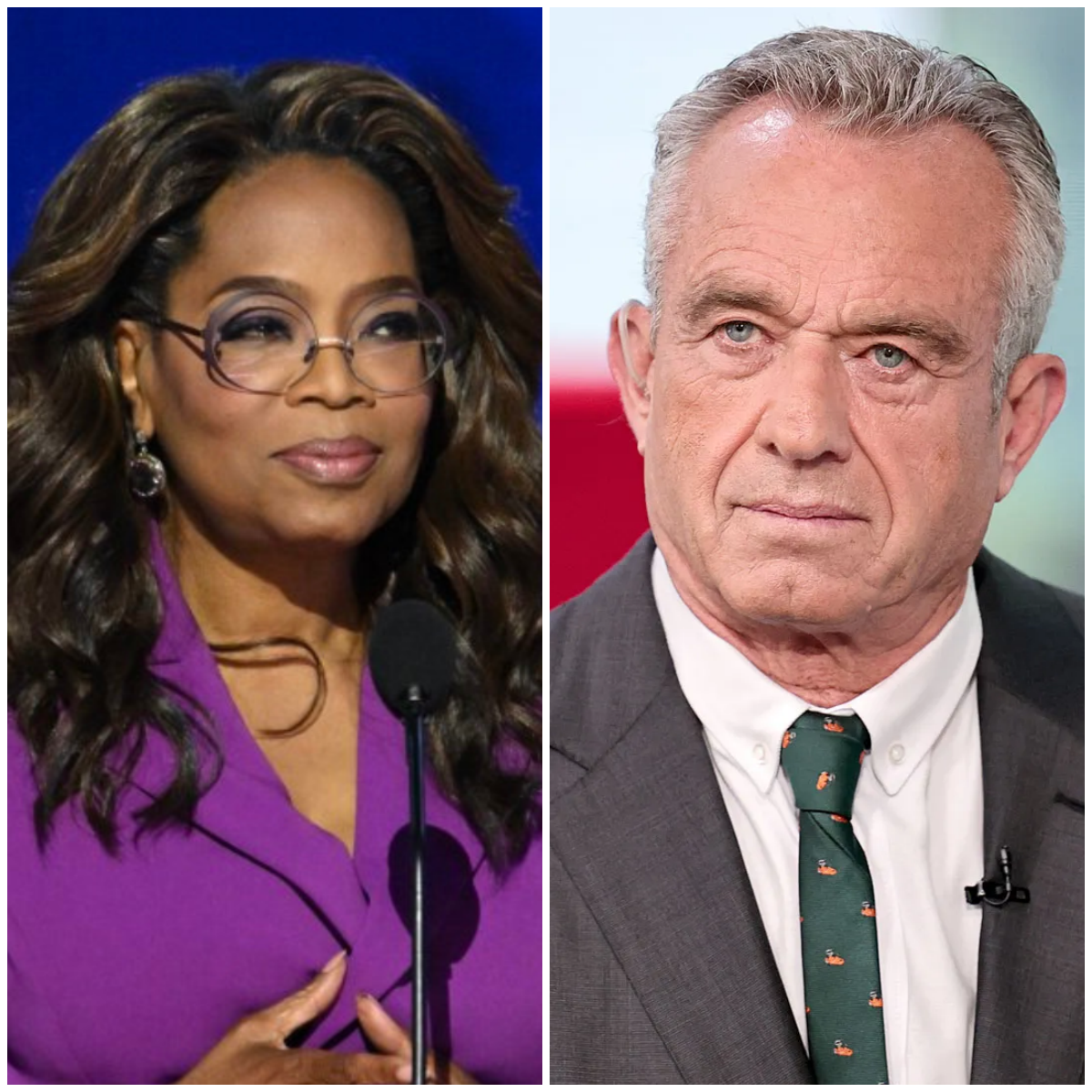
The climax of this fabricated tale is Kennedy’s purported response. He is said to have paused, looked directly at Winfrey, and delivered a powerful, one-sentence retort: “My faith is not a political tool; it is the very foundation upon which I have built my life, and I will not apologize for it, nor will I hide it to please you or anyone else.” This line, according to the story, silenced the veteran talk show host and her audience, creating a moment of dramatic television.
The appeal of this narrative is clear. It presents a classic David-and-Goliath scenario, pitting a political figure often seen as an outsider against a powerful media icon. It touches on sensitive and deeply personal themes of faith, integrity, and public scrutiny. For supporters of Kennedy, it reinforces a perception of him as a principled leader unafraid to stand his ground. For those critical of mainstream media, it plays into the belief that prominent journalists are biased and hostile toward traditional values. The story’s emotional resonance is the engine of its virality.
Despite its compelling nature, the account is demonstrably false. There is no record of any such interview ever taking place. Extensive searches of broadcast archives, news databases, and transcripts of Oprah Winfrey’s many programs—including her classic talk show, “Oprah’s Next Chapter,” and other specials—yield no evidence of this exchange. Neither Winfrey’s nor Kennedy’s official representatives have ever commented on or confirmed such an event, because it does not exist in the annals of recorded media.
Fact-checking organizations have repeatedly identified this story as a piece of satire or outright misinformation that periodically resurfaces online. Its origins can often be traced back to websites designed to generate ad revenue by publishing fictional content disguised as news. These sites thrive on creating emotionally charged, shareable stories that blur the line between reality and fantasy. The tale of the Kennedy-Winfrey showdown is a textbook example of this model, leveraging the high profiles of its subjects to guarantee engagement.
This incident serves as a potent case study in the dynamics of modern misinformation. The creation and spread of such stories are not random; they are often strategically designed to exploit social and political divisions. By manufacturing a conflict that aligns with pre-existing biases, the creators of this content can effectively hijack the attention of a target audience. Users who already feel a certain way about either Kennedy or Winfrey are more likely to believe the story without question and share it with their networks, perpetuating the cycle.
Furthermore, the structure of the story is key to its success. The use of a direct, albeit fabricated, quote makes the event feel concrete and real. The description of Winfrey’s “smirk” and the subsequent “stunned silence” adds a layer of narrative detail that makes the scene easy to visualize. This is a powerful technique in fiction, and when applied to a real-world context with public figures, it becomes a highly effective tool for deception.
In an era of intense political polarization and declining trust in institutions, the proliferation of such fabrications poses a significant challenge. It muddies the waters of public discourse, making it harder for citizens to distinguish between verified facts and emotionally appealing falsehoods. The ultimate lesson from the viral story of Robert F. Kennedy Jr. and Oprah Winfrey is one of media literacy. It underscores the critical importance of approaching online content with a healthy dose of skepticism, verifying sources before sharing, and recognizing the tell-tale signs of a story designed to provoke rather than inform. While the tale of the “speechless” host may be an entertaining drama, its reality is confined to the digital ether from which it was born.